Nonconformance report (NCR)
A nonconformance report template that records the defect and the disposition
Unit 305, Kitchen Rough-In
RTI-0412
- Supply lines pressure tested Pass
- Drain slope verified Pass
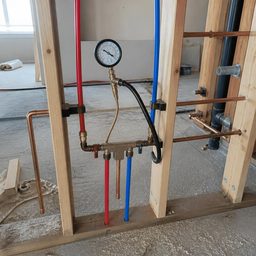
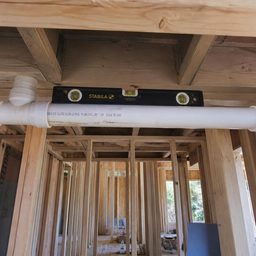
2 photos missing. No record until they exist.
An NCR is only as good as what it proves. This template captures the defect, the requirement it violated, the decision on how to fix it, and the verification that the fix worked.
Unit 305, Kitchen Rough-In
RTI-0412
- Supply lines pressure tested Pass
- Drain slope verified Pass
2 photos missing. No record until they exist.
Where an NCR stops being useful
A nonconformance is any condition that does not meet the contract, drawing or specification requirement. The report that records it has to do more than describe the problem; it has to trace the requirement, the disposition, the corrective action, and the person who verified closure.
Today
NCRs describe the defect but never name the exact requirement that was not met.
With RTI
The template forces the requirement field: the drawing, specification section, or contract clause the work failed to satisfy.
Today
Disposition is a checkbox with no named authority or date.
With RTI
Repair, replace, rework, reject or accept-as-is are recorded with the responsible party, signature and date, so the decision is attributable.
Today
Corrective action is described in a meeting and never written down.
With RTI
The corrective action and verification fields are part of the same record, so the fix and the proof of the fix travel together.
Today
At closeout, NCRs are scattered across emails and spreadsheets.
With RTI
A consistent form produces a single, auditable record that rolls into the turnover package with photos, signatures and dates attached.
Before you buy anything
What a defensible NCR has to record
Does it name the requirement, not just the symptom?
An NCR that only describes the defect is a complaint. One that cites the requirement is evidence that can be reviewed and closed.
Is disposition a decision or a default?
Repair is not the only answer. The form should allow reject, replace, rework, accept-as-is and use-as-is, each with the authority that chose it.
Is verification separate from the corrective action?
The person who fixed it should not be the only person who signs off on it. A verification field with a separate signature closes the loop.
Does it carry a photo of the defect and the correction?
A description can be disputed; a dated photo sequence of the defect and the corrected condition is much harder to argue with.
Blank NCR form
Download a print-ready, fillable PDF template with the identification grid, description, requirement not met, disposition, root cause, corrective action, verification and sign-off blocks already laid out.
Raise your next NCR with a form that closes the loop
Use the blank NCR template above on your next job. It is a printable PDF with the identification grid, description, requirement, disposition, root cause, corrective action, verification and sign-off blocks already laid out.