Email threads vs RTI
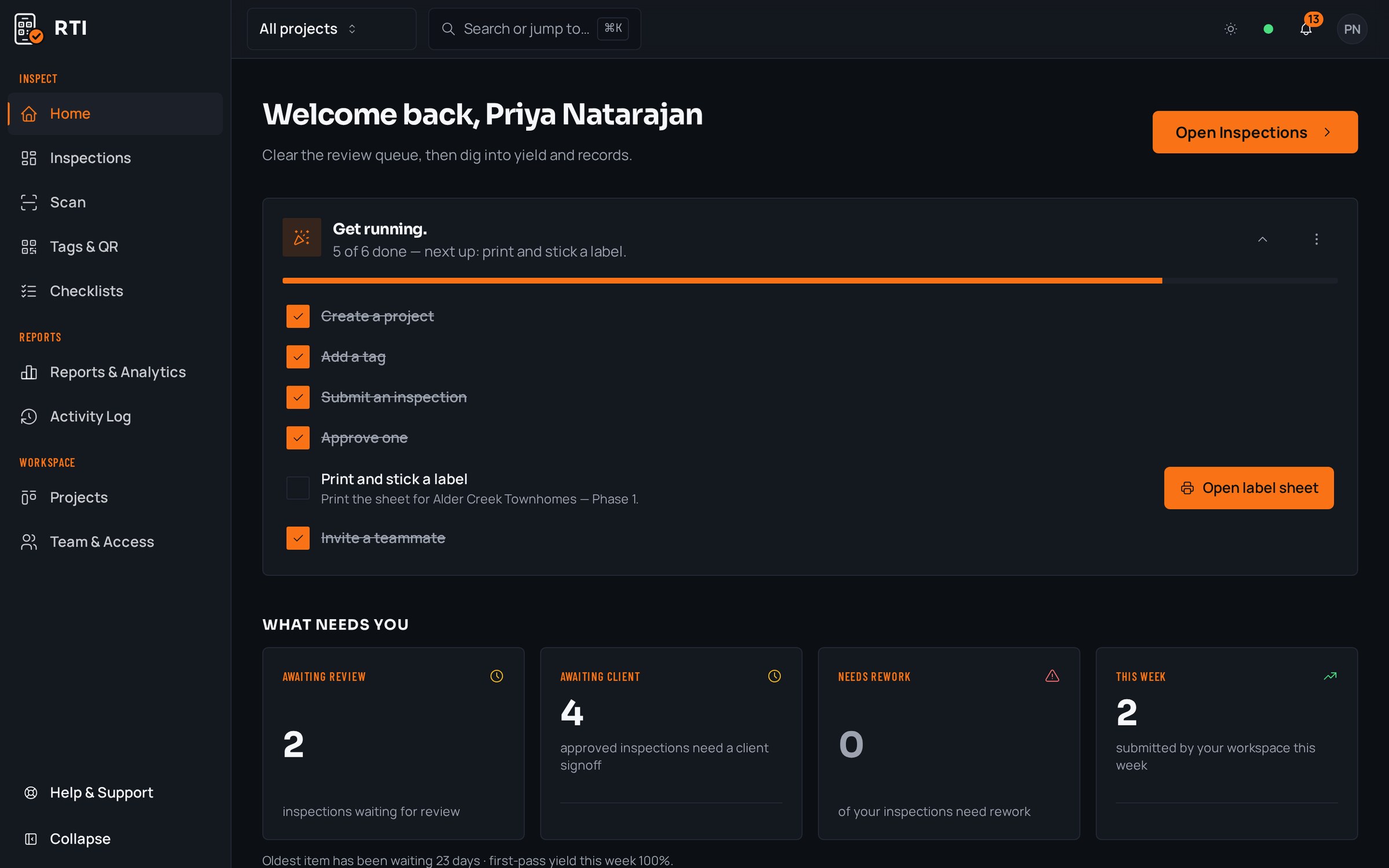
Readiness should be a board, not a buried thread.
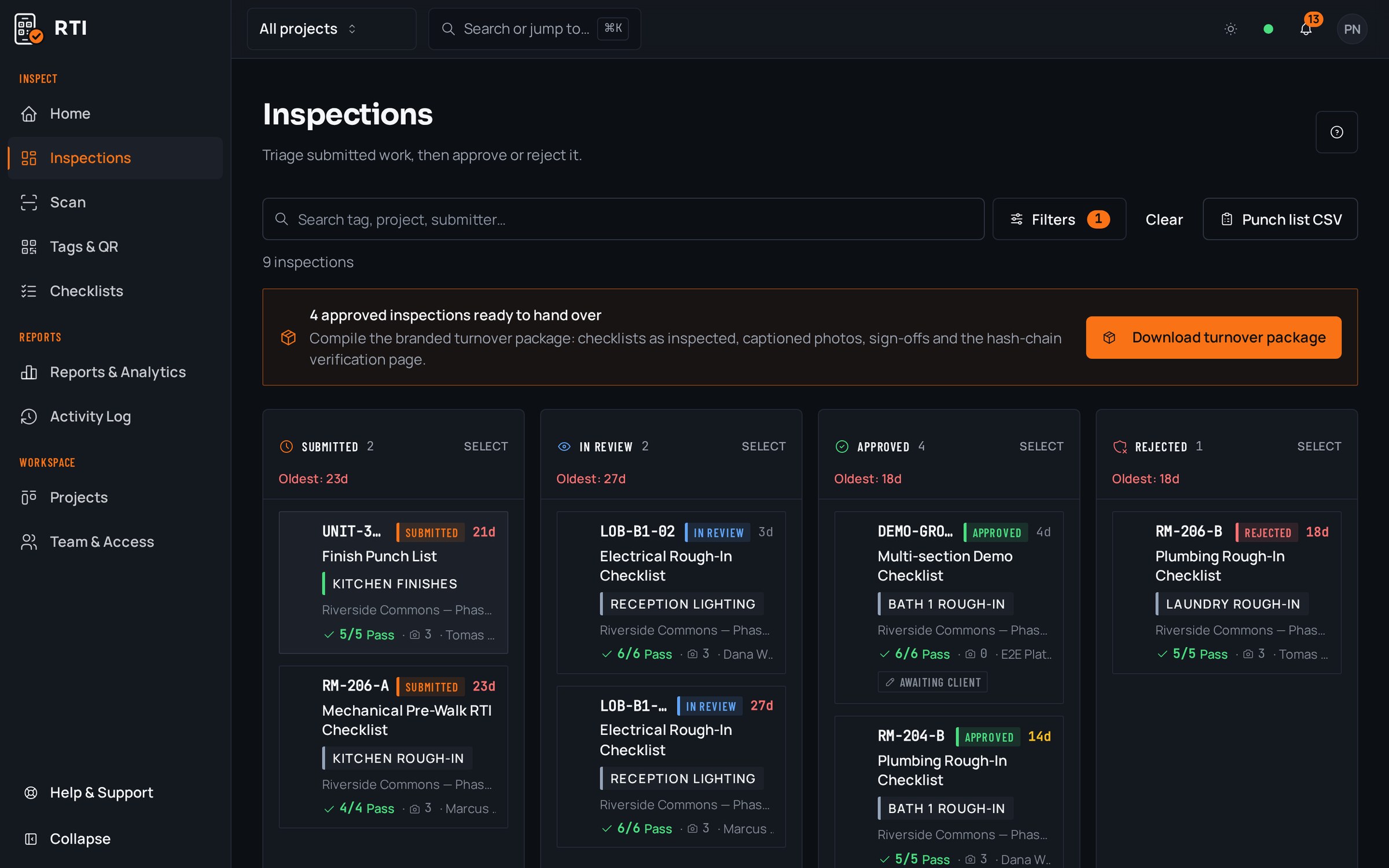
Requesting and approving inspections over email means the status of the job lives in a hundred forwarded threads. RTI puts every request on one review board and every decision on a permanent trail, so you can see what is actually ready without reading your inbox.
A real inspection point
What this looks like on your job
One tag, one checklist, and the photos that have to come with it.
Tag
Level 4 West, Drywall Inspection
CTR-B-L4-DW-W
- Sticker location
- Corridor wall at grid line D6
- Bound checklist
- Drywall inspection, pre-finish
- Fastener type and spacing to schedule2 photos required
- Corner bead secured with no edge cracking1 photo required
- Control joints located per plan1 photo required
- No sheet damage at penetrations2 photos required
Checklists for your work
Start from a checklist that already knows the walk
Real guides from the RTI library. Sections in build order, what to look for on each item, and the photos that prove it. Free to read, one click to run on a tag.
- ITPInspection and test plan (ITP)Activities, acceptance criteria, hold points and the record per row.11 items8 photos
- QC planConstruction quality control planRoles, definable features of work, three-phase control, nonconformance.12 items15 photos
- Site walkSite inspection checklistDaily walk: access, housekeeping, protection, environmental controls.12 items18 photos
What gets in the way, and what RTI does about it
Today
The request for an inspection is in one thread, the approval is in a reply nobody was copied on, and the truth is whatever the last email said.
With RTI
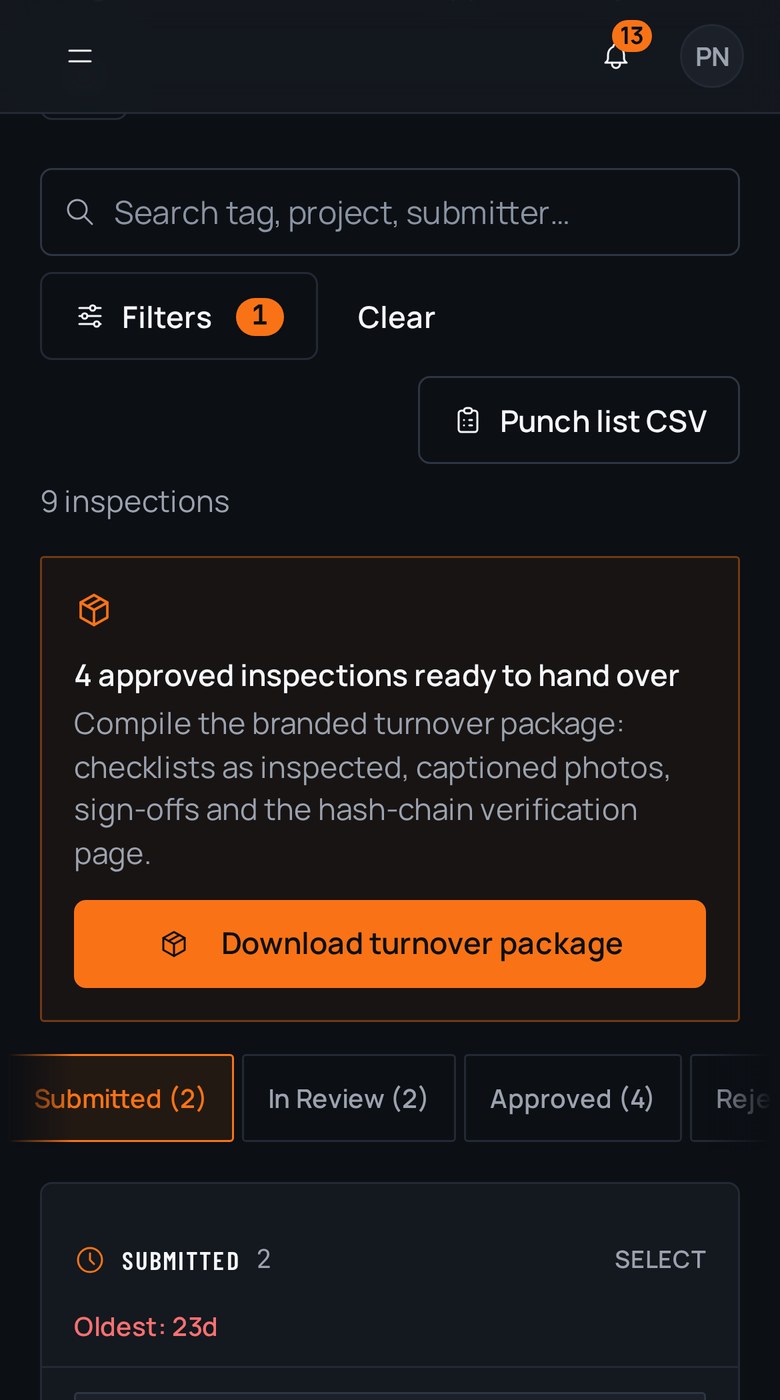
Every request lands on one review board and moves across submitted, in review, approved and rejected lanes. The current state is the board, not the last message anyone remembered to send.
Today
Photos ride along as email attachments, detached from the item and the location they were meant to document.
With RTI
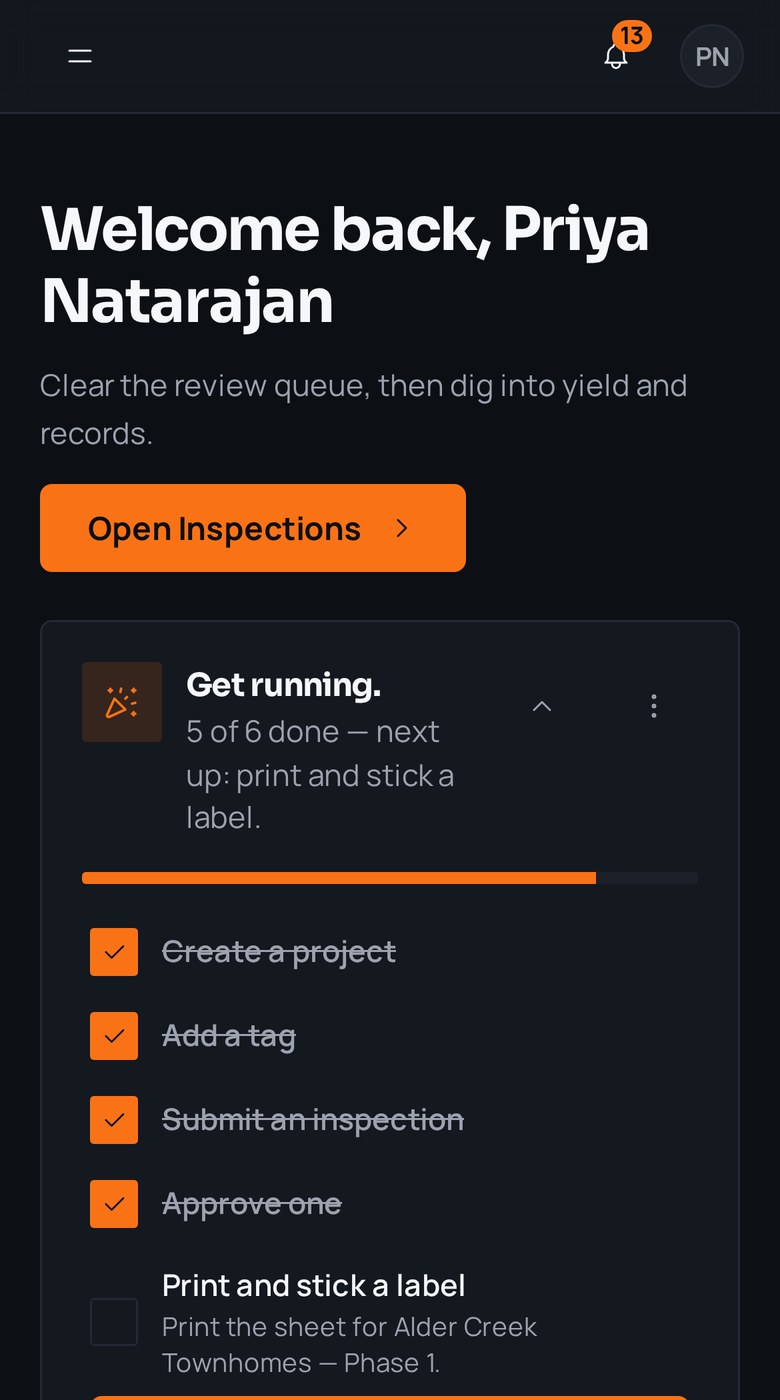
Photos are attached to their checklist items on the tag before the submission is ever sent, so the evidence arrives already fastened to the work it proves.
Today
Weeks later, no one can reconstruct who approved what, or when, without digging through forwarded threads across several mailboxes.
With RTI
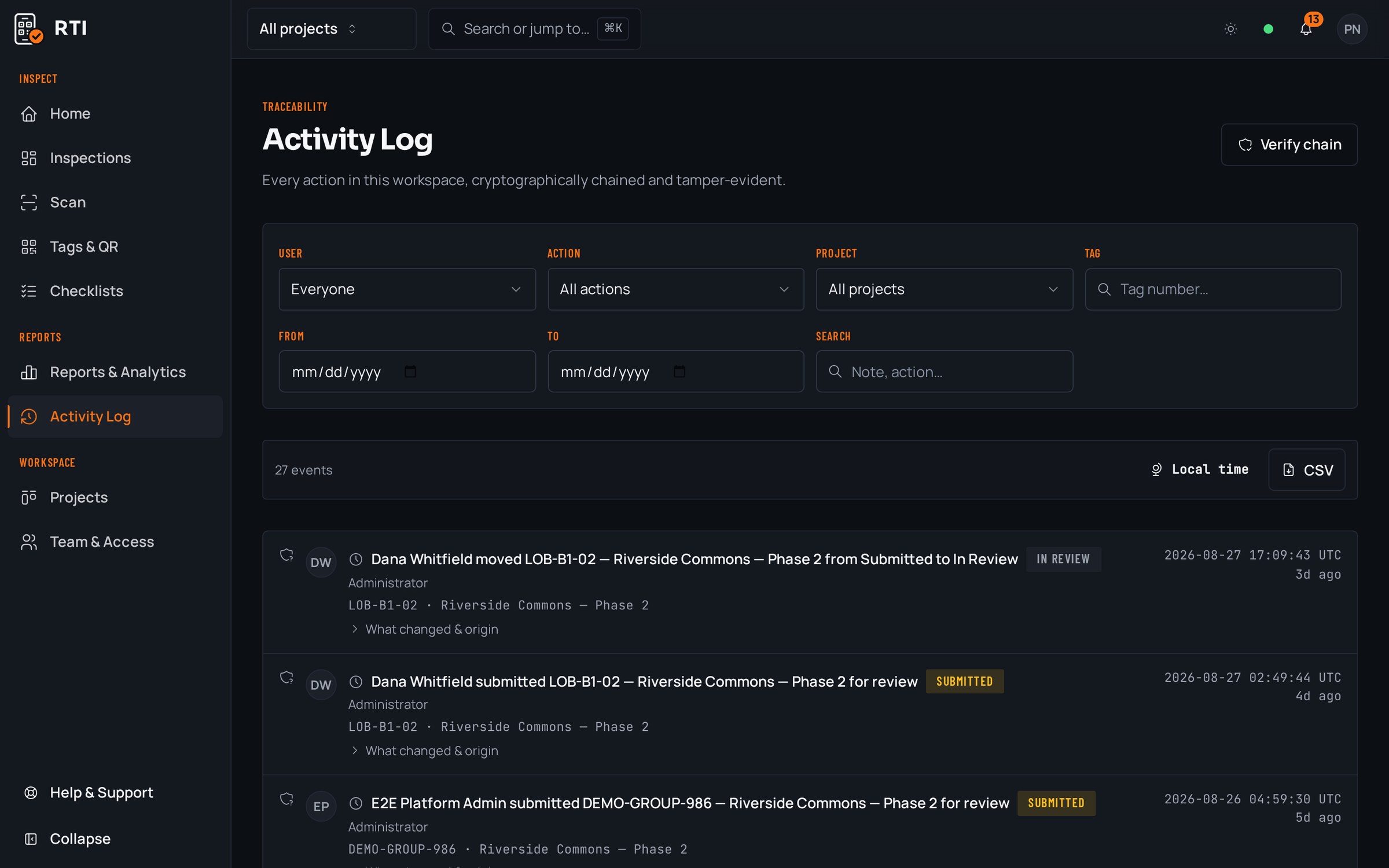
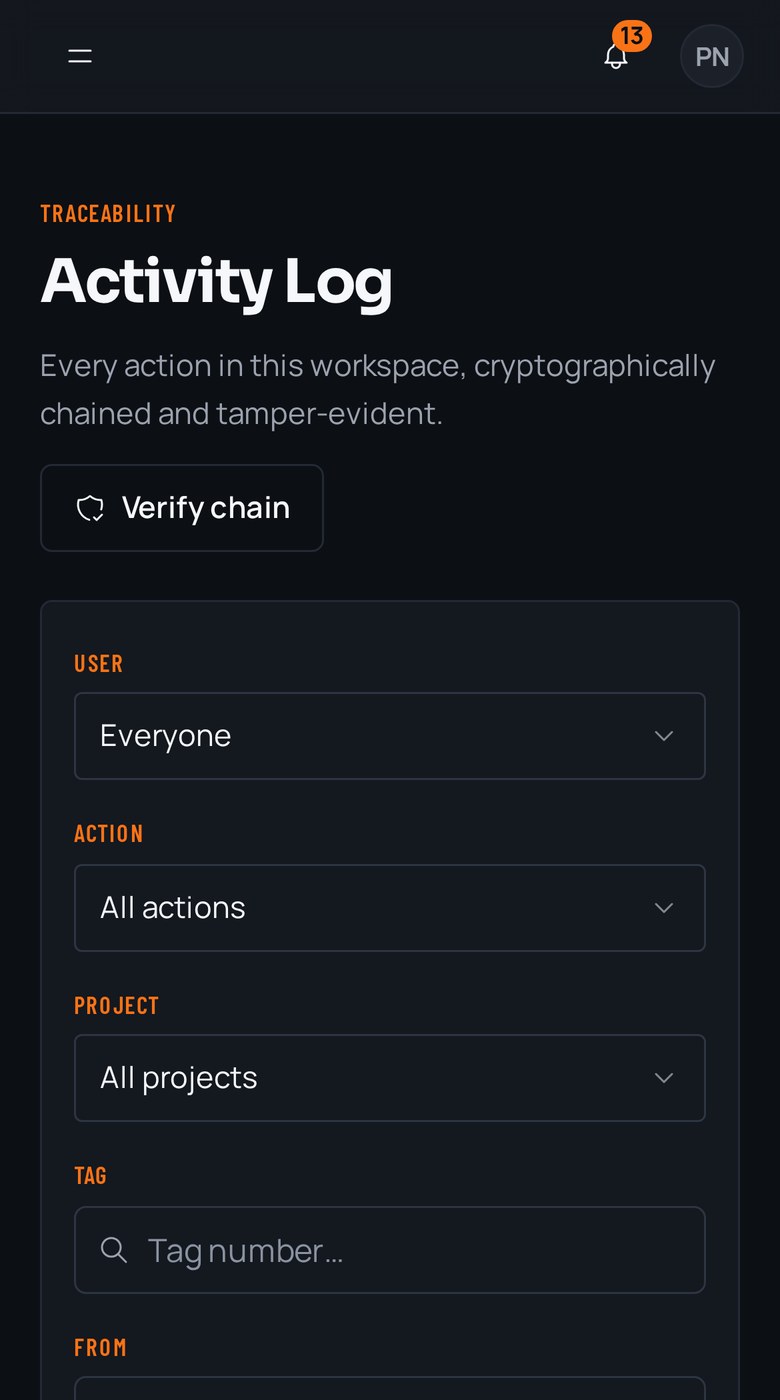
Every approval and rejection is written to a SHA-256 hash-chained log on the tag. The decision trail is permanent, dated and in one place, not scattered across inboxes.
Questions about email threads vs RTI
- What breaks when inspection requests go through email?
- Status scatters. One area's request is in a thread, the response is in a reply someone forgot to reply-all on, and the photos are attachments detached from the item they belong to. There is no single place that shows what has been submitted, what is in review and what was rejected.
- How is the review board different from a well-organized inbox?
- An inbox is ordered by when mail arrived, not by what is ready. The RTI board has submitted, in review, approved and rejected lanes, so a submission moves across it as its status changes. You read the state of the job at a glance instead of reconstructing it from a thread.
- If we approve or reject in RTI, is there still a record like an email trail?
- A stronger one. Every submission, review, approval and rejection is written to a tamper-evident activity log, hashed with SHA-256 so it cannot be edited after the fact. Unlike an email trail, it is attached to the tag and cannot be selectively deleted from one person's mailbox.
Put it on a real job.
Tag one area, run one walk, and see the record it leaves behind. Start free. 30 days, no card required.