Paper & binders vs RTI
The binder proves the walk happened. It can't prove what you saw.
Paper checklists and a closeout binder are honest work, and a signed page carries real weight. But the page depends on legible handwriting, it can be lost or soaked before it's scanned, it rarely has photos attached to the item they belong to, and it all has to be re-keyed later by someone reading a checkmark.
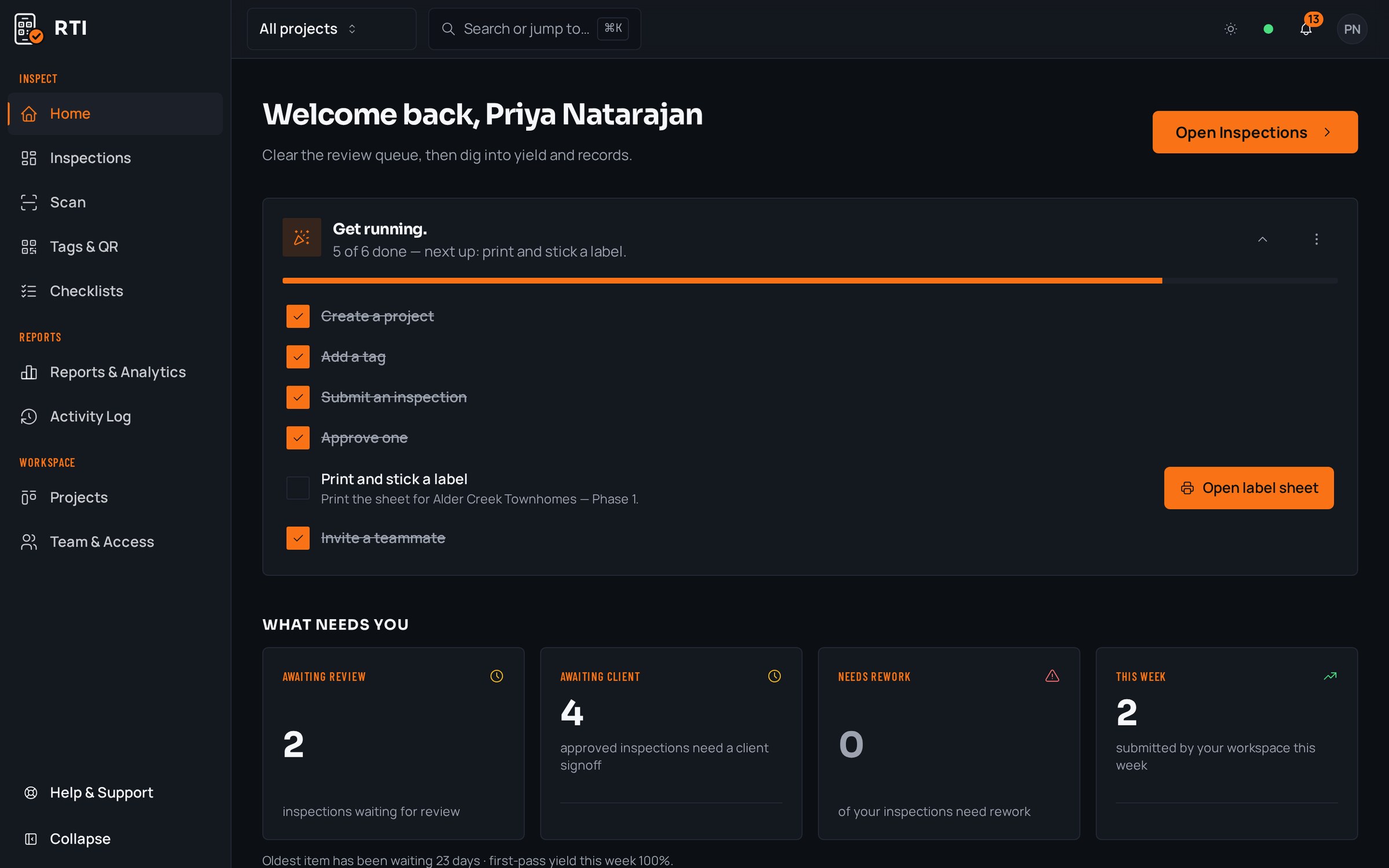
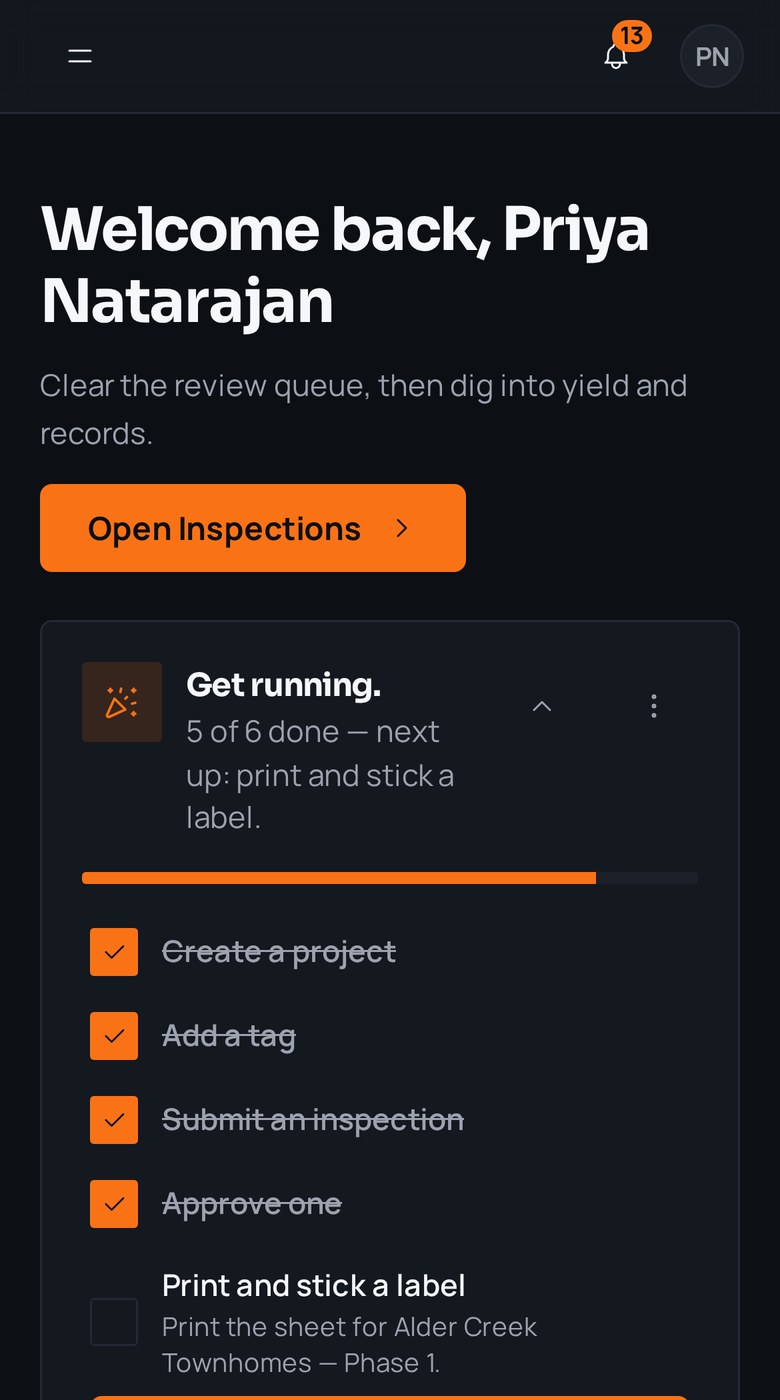
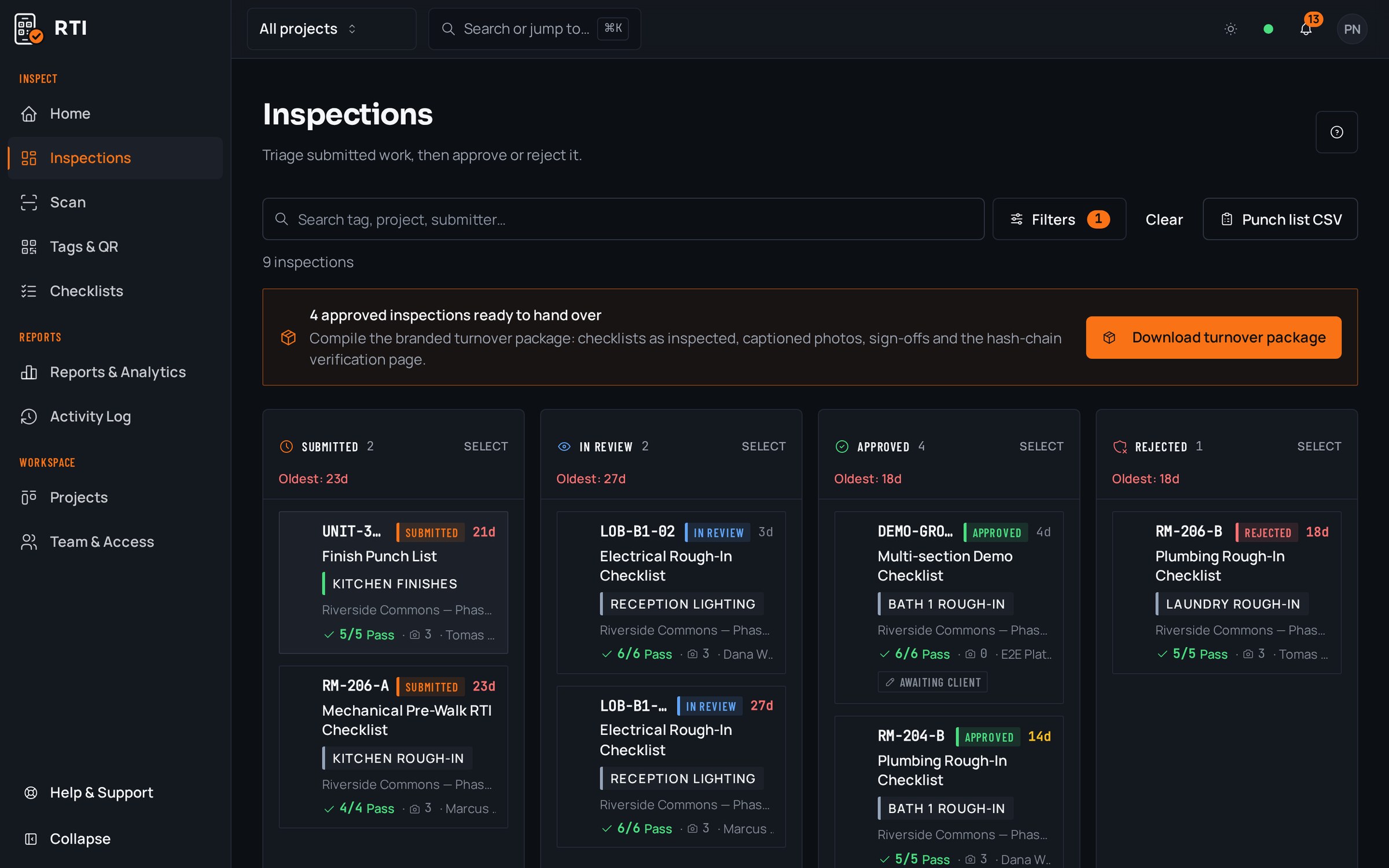
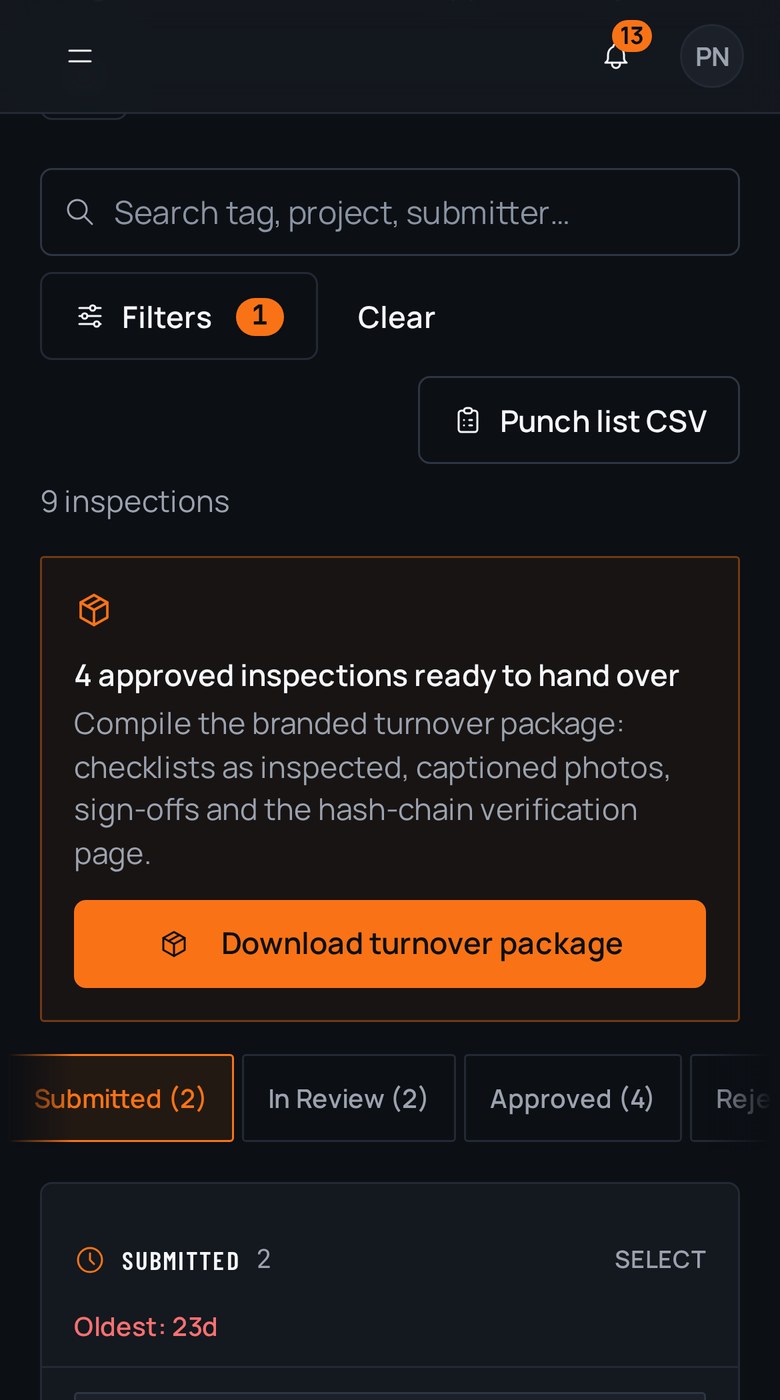
A real inspection point
What this looks like on your job
One tag, one checklist, and the photos that have to come with it.
Tag
Suite 1180, Final Walk
MTN-11-1180-FW
- Sticker location
- Corridor door, Suite 1180
- Bound checklist
- Tenant fit-out, final inspection
- Ceiling grid and tiles complete, no stained tiles2 photos required
- Life-safety signage installed and lit1 photo required
- Flooring transitions set, no lifting edges2 photos required
- All devices and cover plates installed and level1 photo required
Checklists for your work
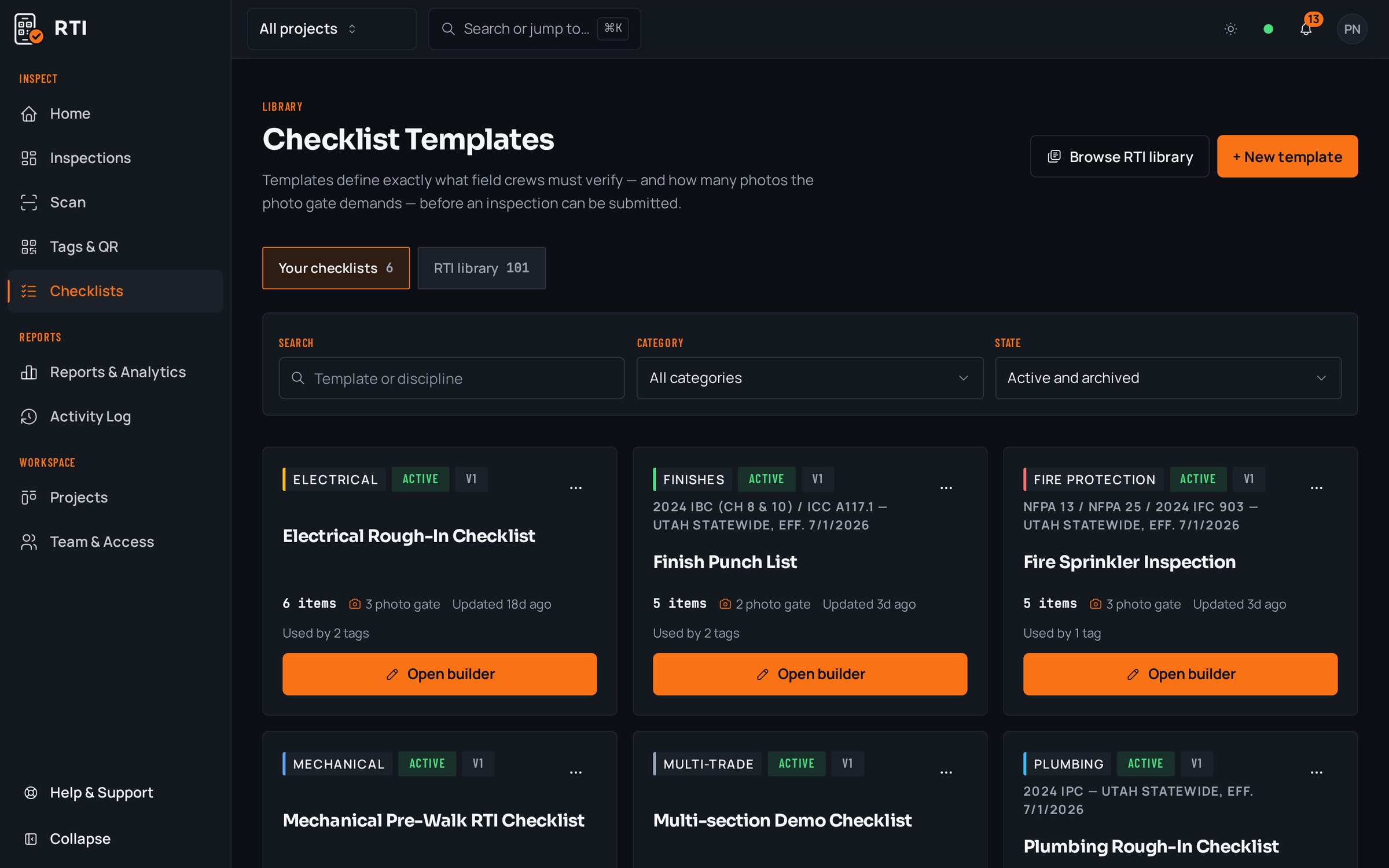
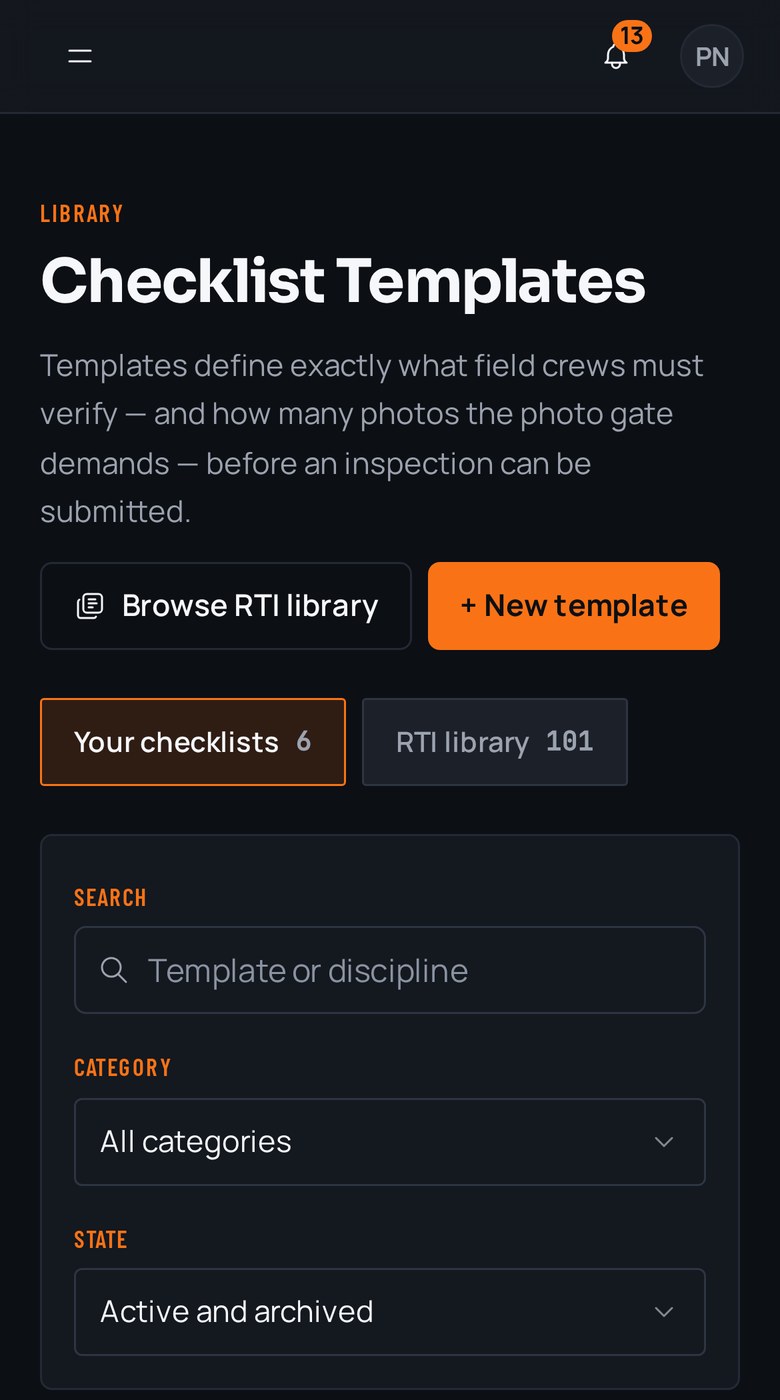
Start from a checklist that already knows the walk
Real guides from the RTI library. Sections in build order, what to look for on each item, and the photos that prove it. Free to read, one click to run on a tag.
- Punch listPunch list templateRoom-by-room closeout items with the before-and-after that closes them.15 items21 photos
- Final inspectionFinal inspection checklist for constructionThe handover walk: systems, life safety, finishes and documentation.15 items25 photos
- Site walkSite inspection checklistDaily walk: access, housekeeping, protection, environmental controls.12 items18 photos
What gets in the way, and what RTI does about it
Today
A checkmark and initials on a page prove the walk happened, but not what the reviewer actually saw at that item.
With RTI
Each item carries the photos that prove it, captured on the phone before the item can be submitted. The record shows the condition, not just that someone reviewed it.
Today
Pages get soaked, lost, or filed in the wrong binder, and a scanned checkmark still has to be re-keyed by hand.
With RTI
The record is born digital on the tag it belongs to, so there is nothing to lose and nothing to transcribe. What the crew answered in the field is already the record, photos included.
Today
Assembling the closeout binder means collating loose pages and hunting for the photos that go with them.
With RTI
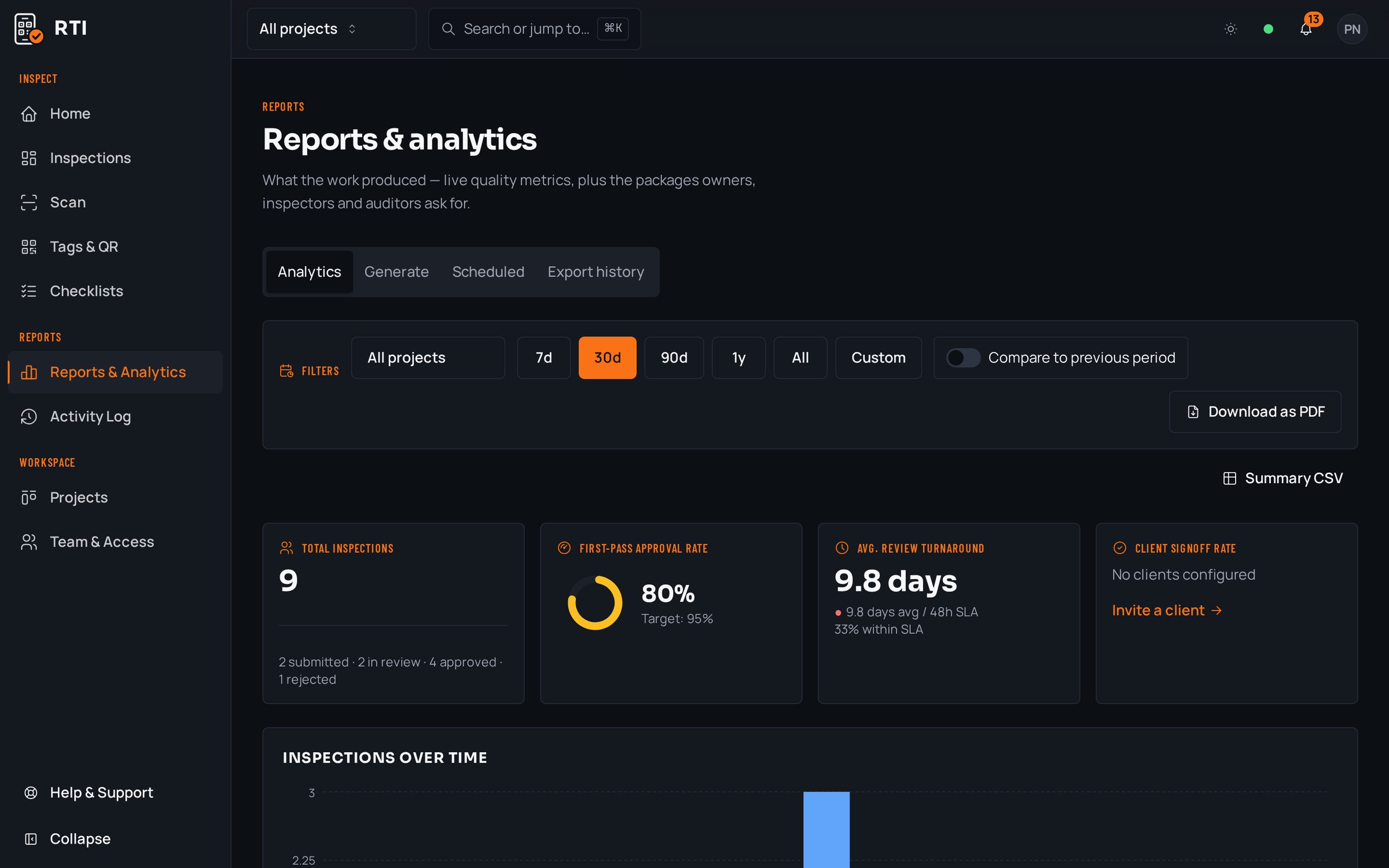
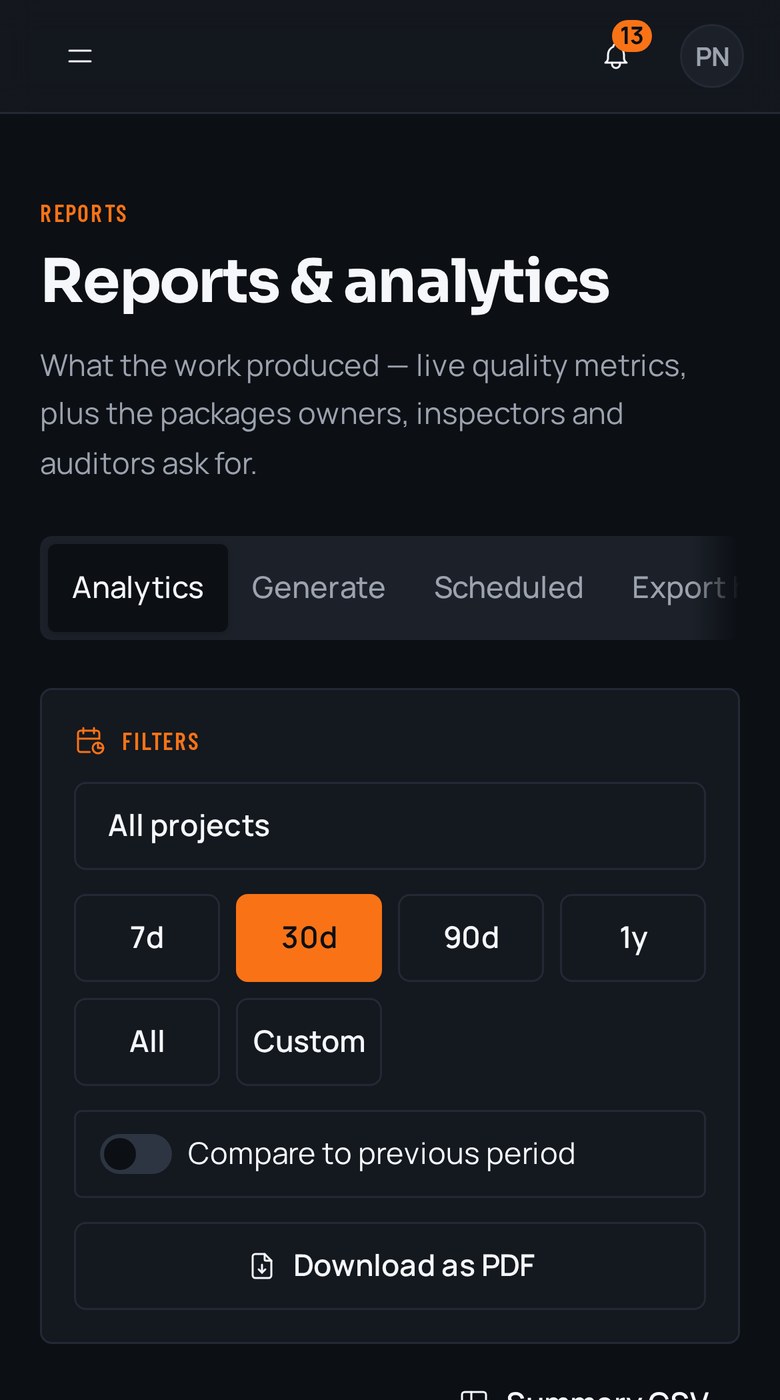
Export any tag, unit or project as a branded PDF or CSV with answers, photos, signatures and signoffs already in order. The closeout package assembles itself instead of costing you a week.
Questions about paper & binders vs RTI
- We hand crews a clipboard and it works. Why move off paper?
- Paper works right up until you need the record. A checkmark on a page tells you an item was reviewed, not what the reviewer saw. RTI keeps the same walk your crews already do, but each item carries the photos that prove it, the record is born digital instead of scanned in later, and nothing has to be re-keyed from someone's handwriting.
- Half the value of the binder is the photos. Doesn't RTI just replace the checklist?
- It replaces both, and joins them. On paper the photos live somewhere else — a camera roll, a separate folder — and matching a photo to the item it proves is a manual job done from memory. In RTI the required photo is captured against the specific checklist item, on the tag, so the item and its evidence are one record from the start.
- The binder is what we hand the owner at closeout. What replaces that?
- Export. Any tag, unit or project comes out as a branded PDF or CSV whenever you ask — checklist answers, photos, signatures and signoffs already assembled in order. The closeout package builds itself from the record instead of from a week of collating pages, and you can hand the owner a portal login to review and sign off from their phone.
Put it on a real job.
Tag one area, run one walk, and see the record it leaves behind. Start free. 30 days, no card required.