Group chats vs RTI
The group chat moves fast. Then the proof scrolls away.
A text thread or WhatsApp group is how a lot of jobs actually get coordinated, and for a quick question it's hard to beat. But a chat has no structure: photos and approvals arrive between memes and lunch runs, there's no lane for what's still open, and a month later the proof you need has scrolled off the top and can't be exported as anything.
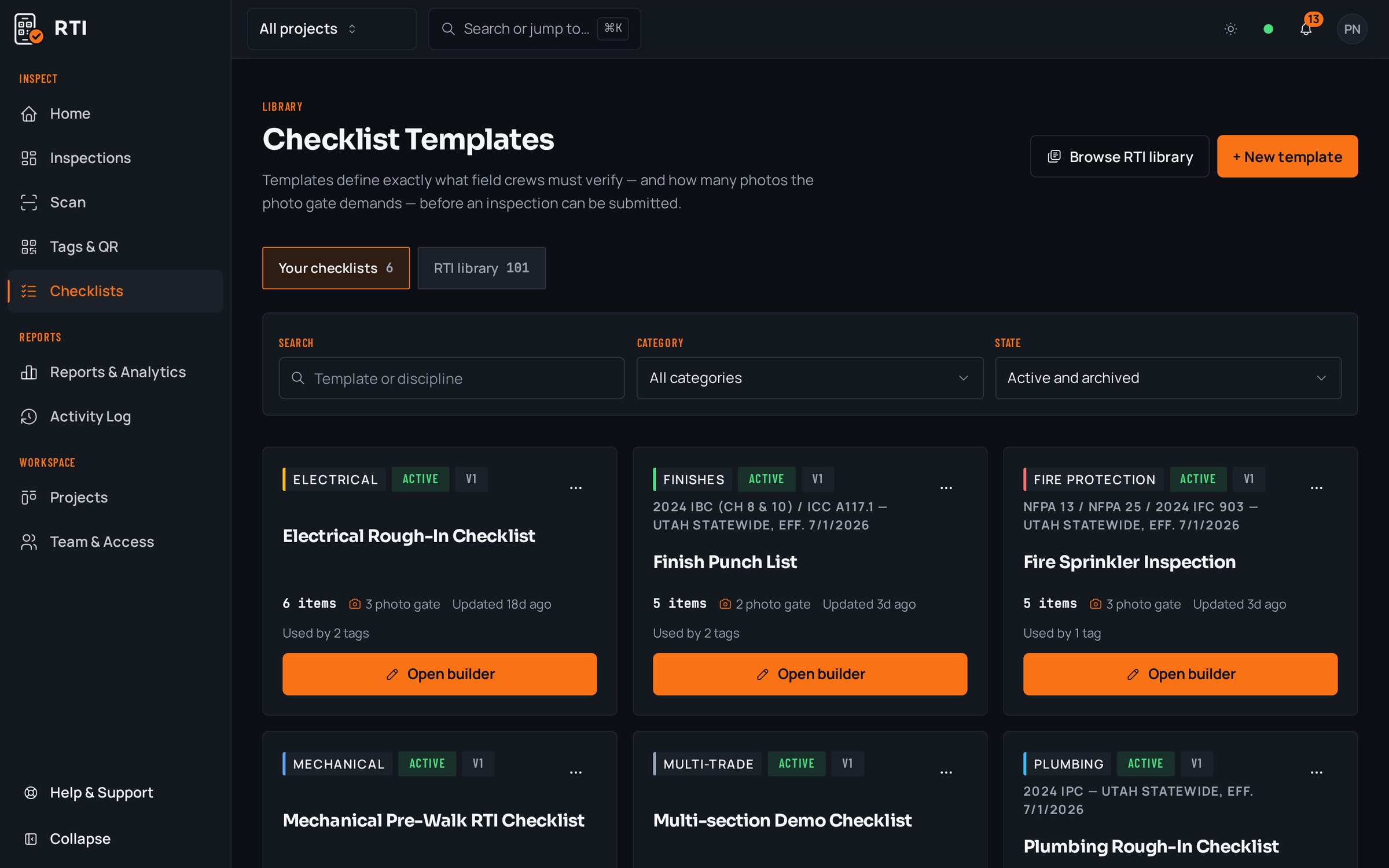
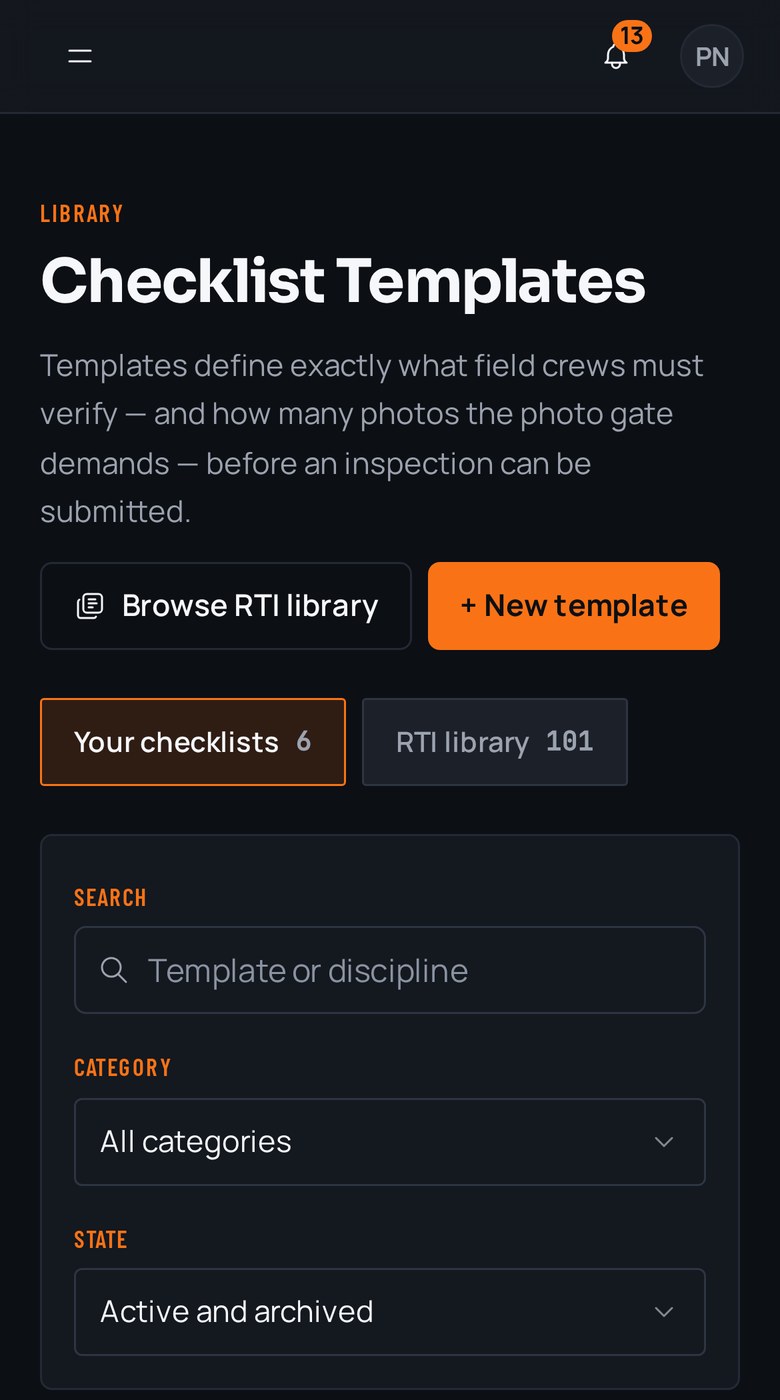
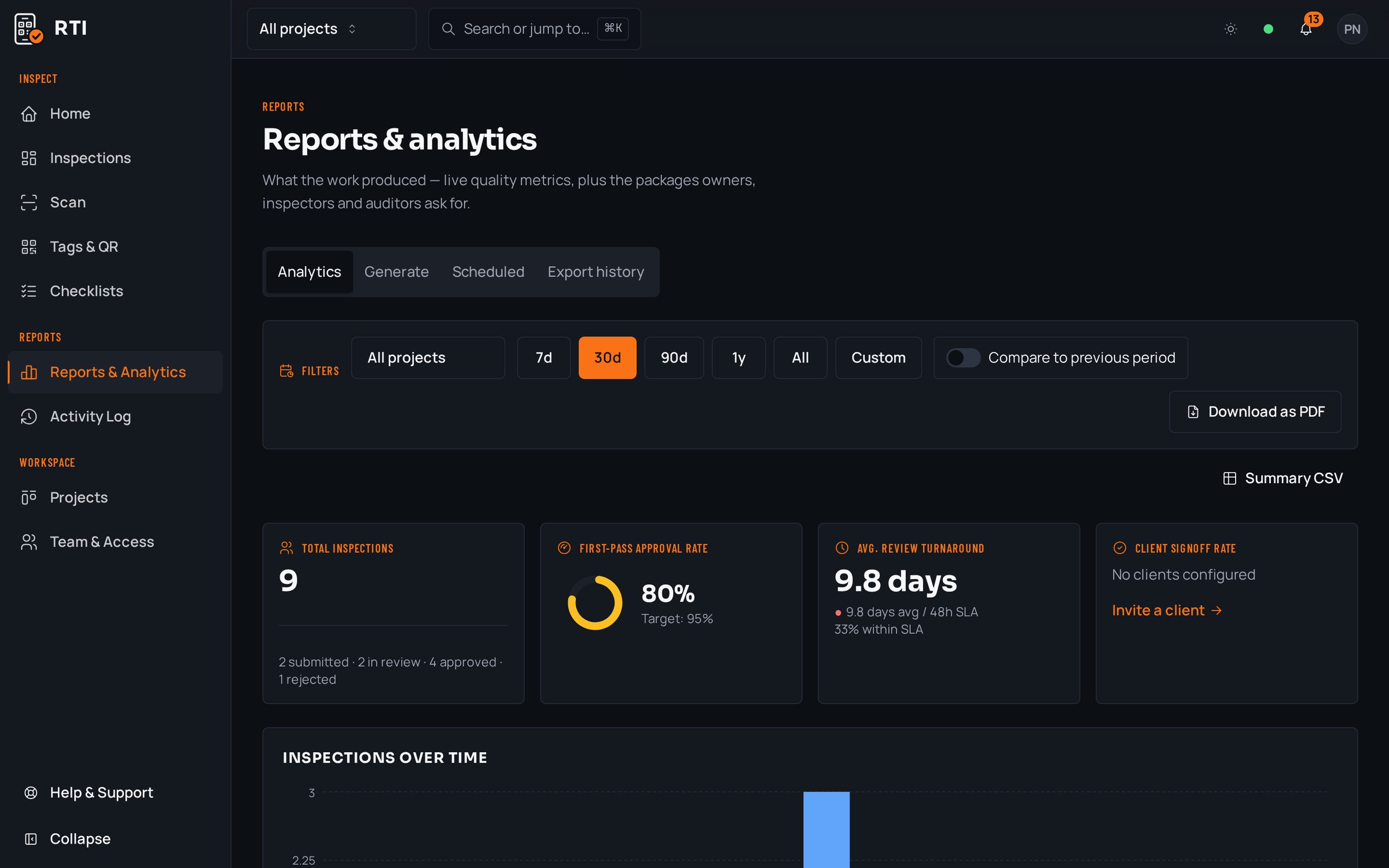
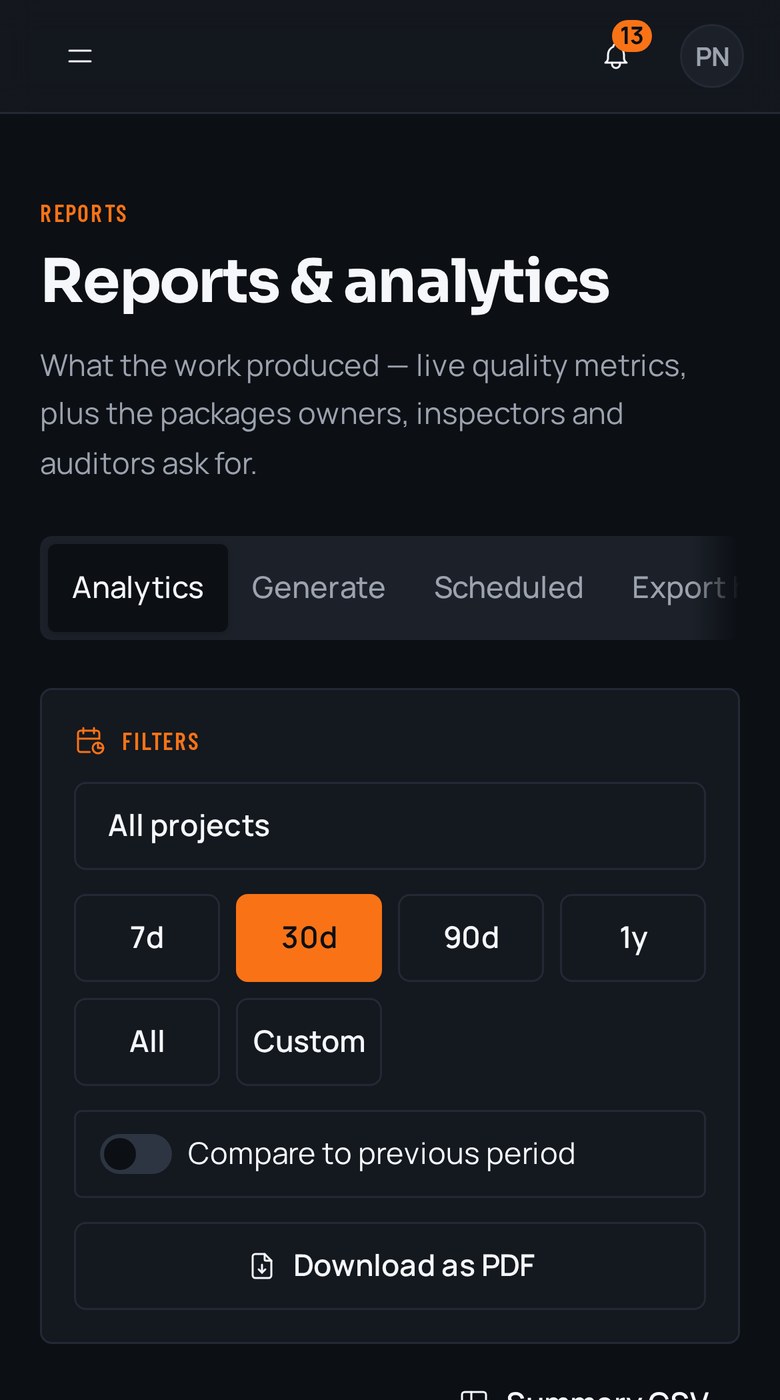
A real inspection point
What this looks like on your job
One tag, one checklist, and the photos that have to come with it.
Tag
Grid E-7, Slab Pre-Pour
DPT-2-E7-PP
- Sticker location
- Column line E-7, second-floor deck
- Bound checklist
- Elevated slab, pre-pour
- Rebar size and spacing verified to drawings2 photos required
- Embeds and sleeves placed and secured2 photos required
- Required cover maintained at chairs1 photo required
- Deck clean and edge forms braced1 photo required
Checklists for your work
Start from a checklist that already knows the walk
Real guides from the RTI library. Sections in build order, what to look for on each item, and the photos that prove it. Free to read, one click to run on a tag.
- Site walkSite inspection checklistDaily walk: access, housekeeping, protection, environmental controls.12 items18 photos
- Punch listPunch list templateRoom-by-room closeout items with the before-and-after that closes them.15 items21 photos
- QC planConstruction quality control planRoles, definable features of work, three-phase control, nonconformance.12 items15 photos
What gets in the way, and what RTI does about it
Today
An approval typed into the thread is real, but a month later it has scrolled past a hundred other messages and no one can find it.
With RTI
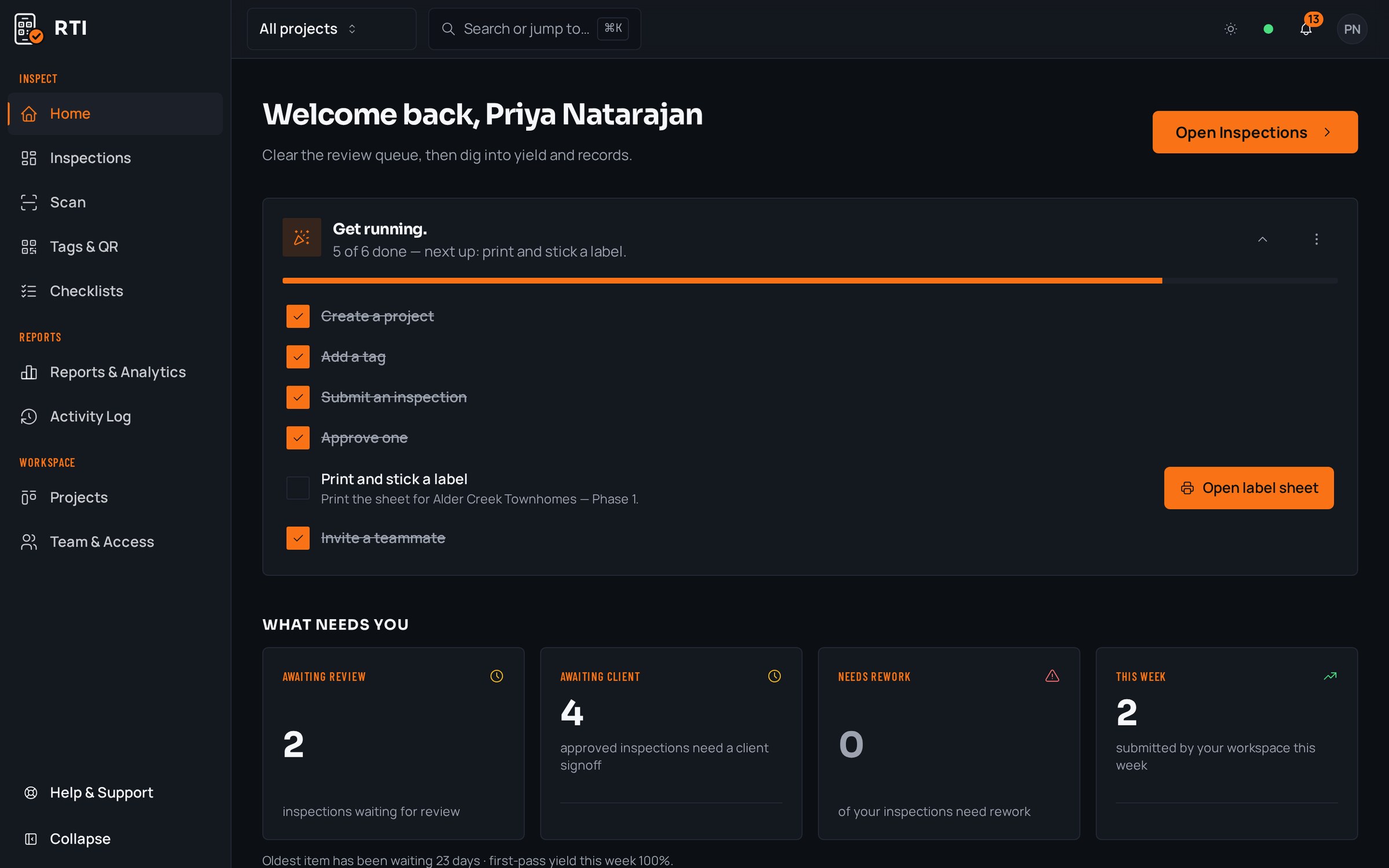
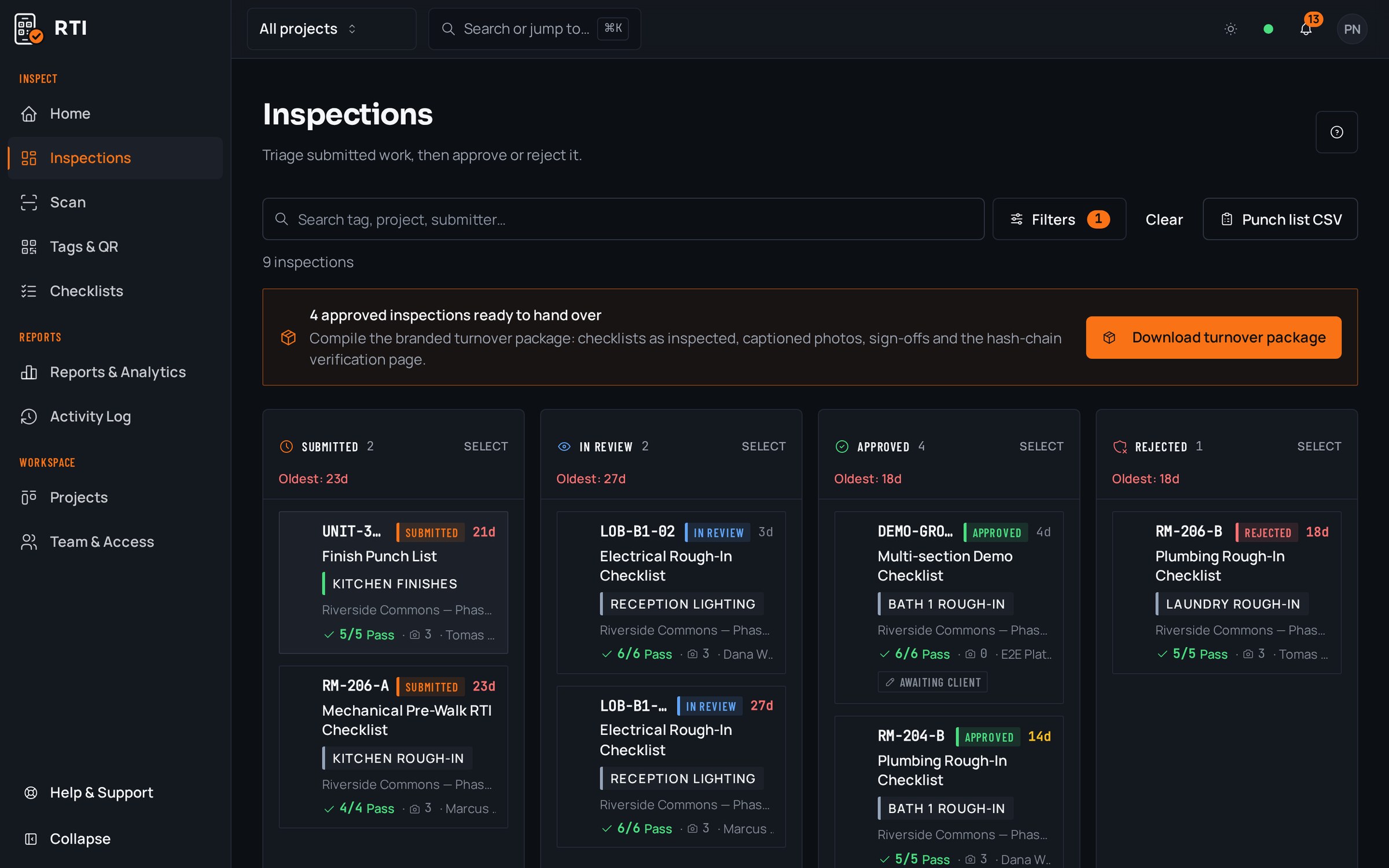
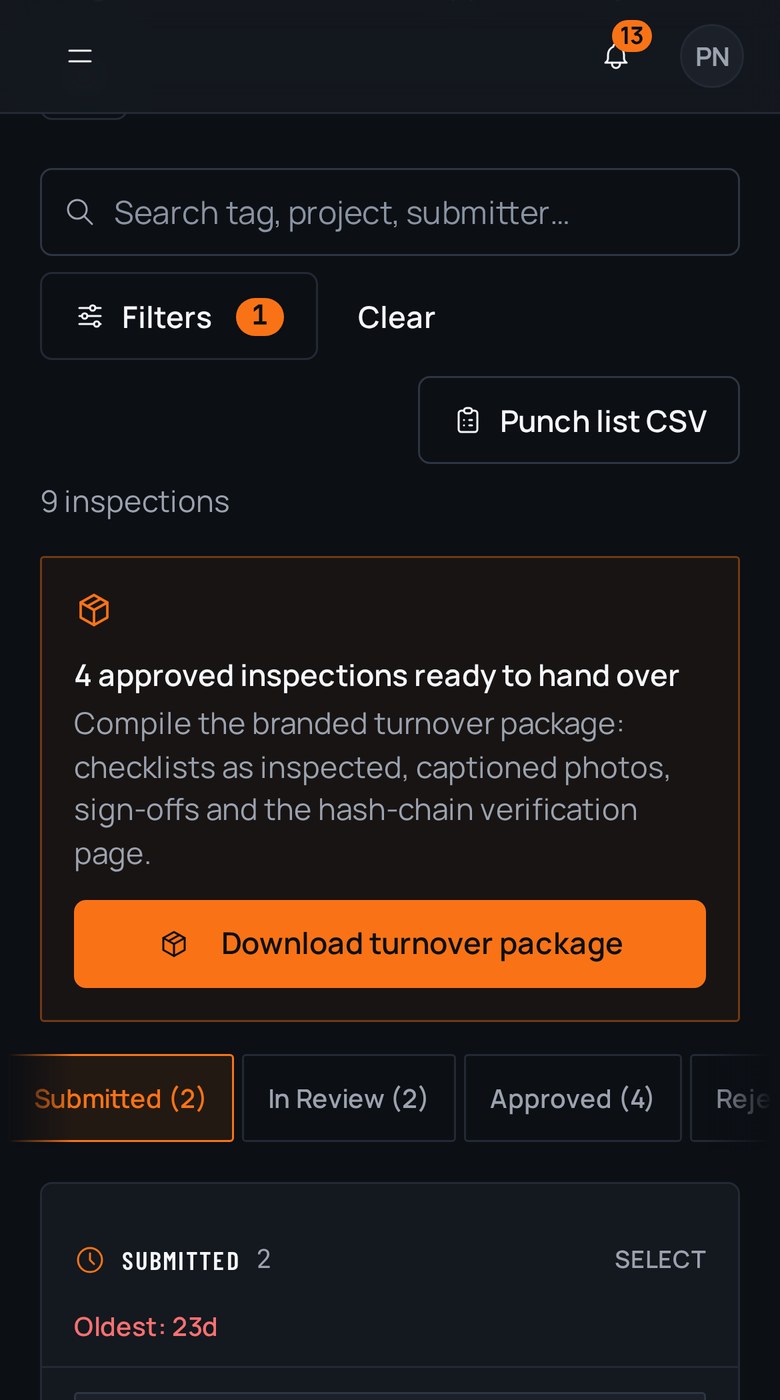
Every submission lands on a review board with lanes for submitted, in review, approved and rejected. The state of each item is a place you can look, not a message you have to scroll back to.
Today
Photos and answers arrive with no structure, mixed in with schedule talk and lunch orders, attached to nothing in particular.
With RTI
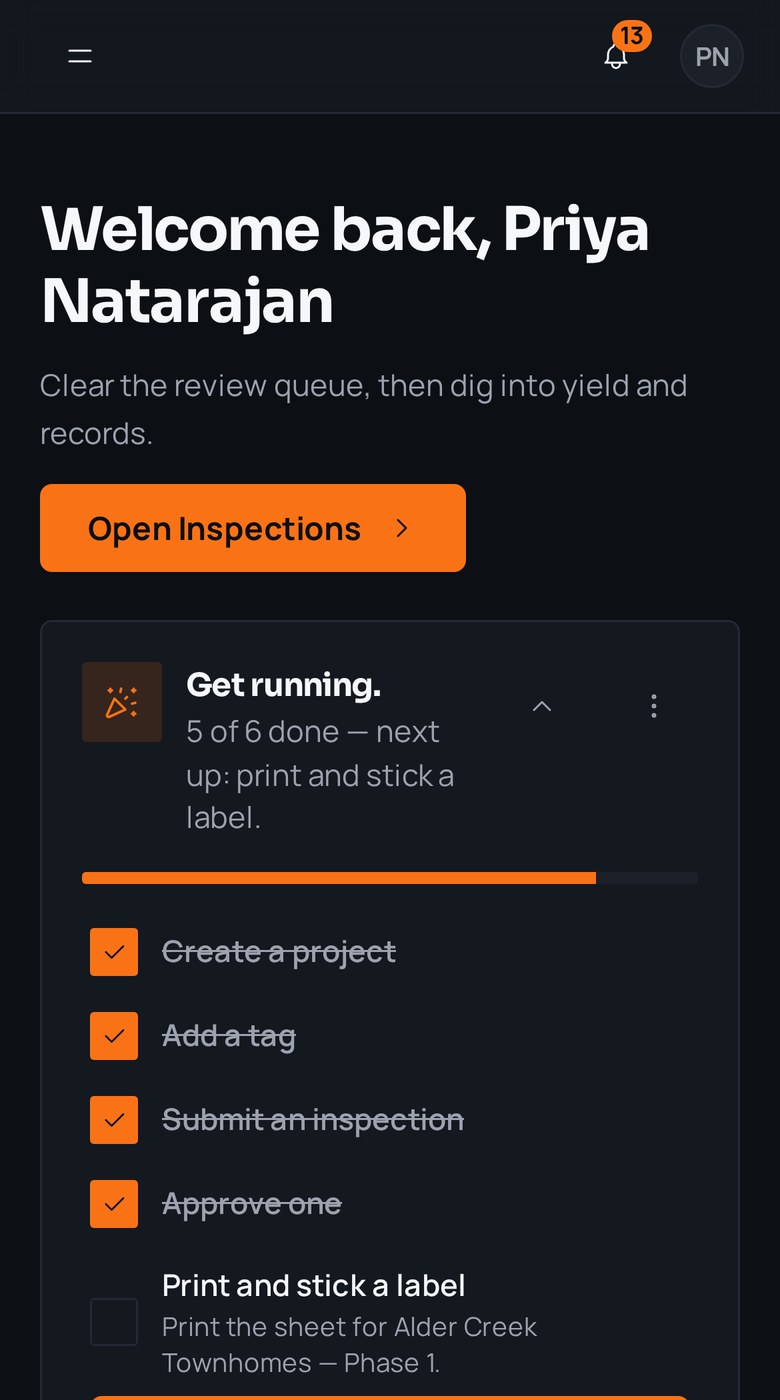
Each submission is structured against the checklist item it answers, on the tag it belongs to, with the required photos attached before it can be sent. The proof is organized at the moment it's captured.
Today
When the owner or a lawyer asks for the record, a chat gives you screenshots that prove almost nothing.
With RTI
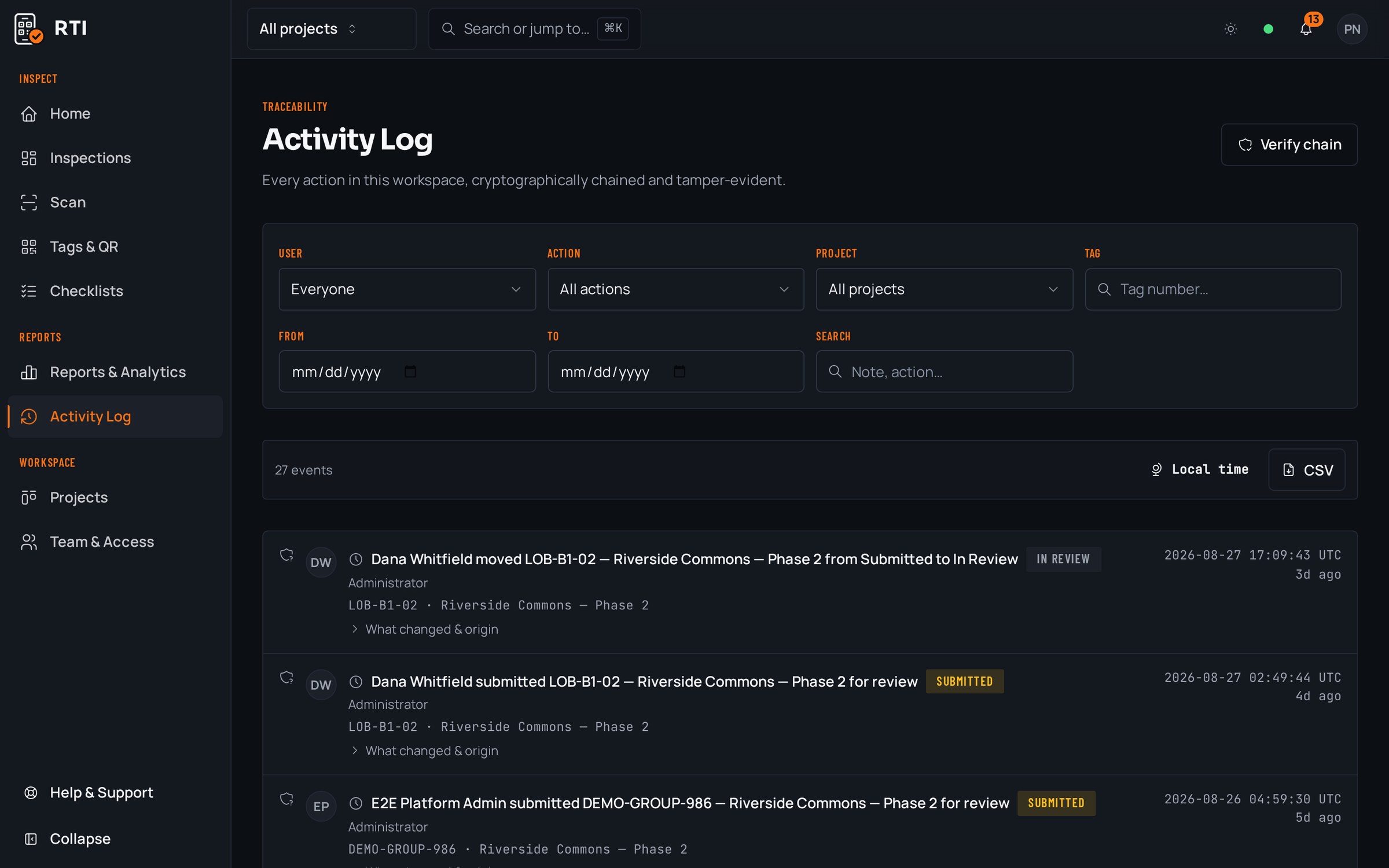
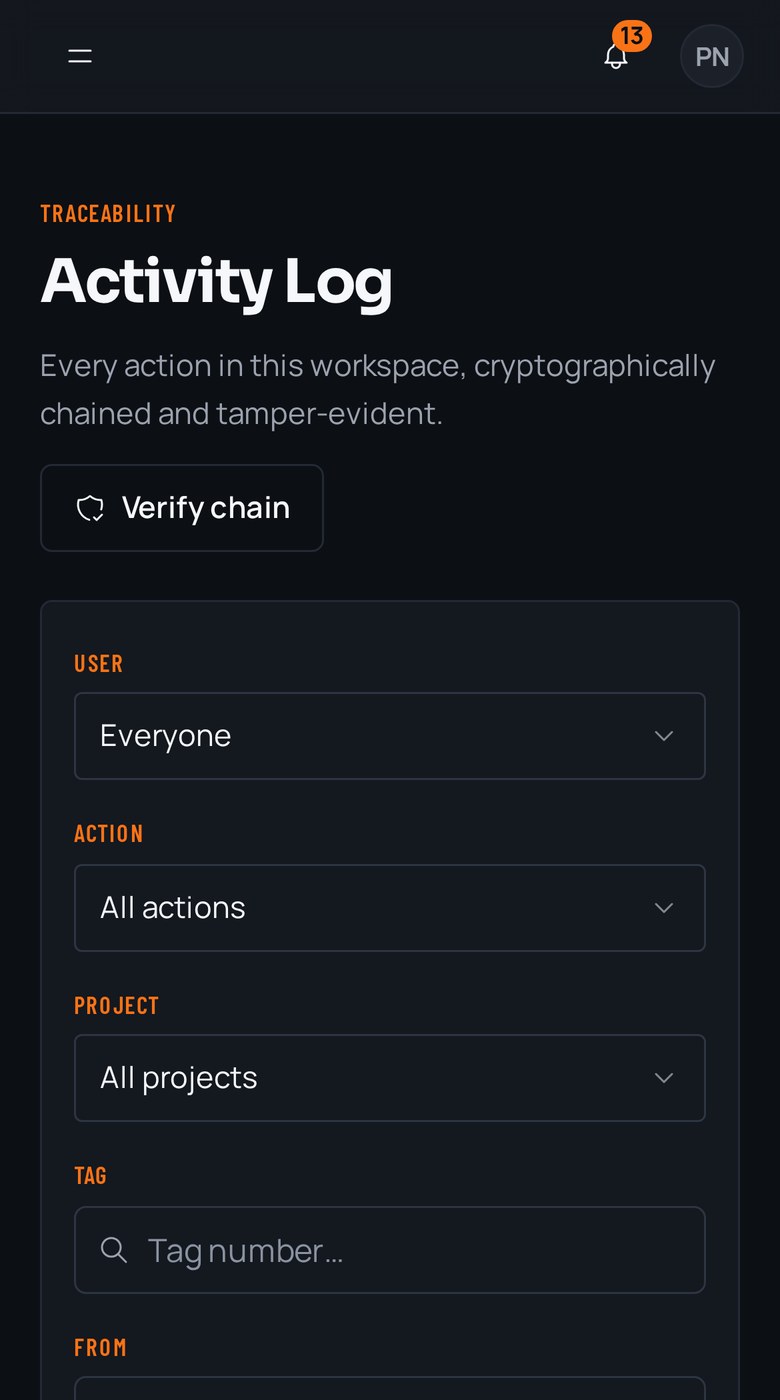
Export any tag, unit or project as a branded PDF or CSV any time, backed by an activity log that hashes each entry over the previous one with SHA-256. It's a permanent record, not a screenshot of a conversation.
Questions about group chats vs RTI
- The job runs in a WhatsApp thread and it's fast. Why change what works?
- The thread is great for coordination and terrible for proof. An approval typed at 9pm sits between two unrelated messages, a photo has no item attached to it, and nothing tells you what's still open. RTI keeps the speed of a quick submission from the phone but lands it on a review board with lanes for submitted, in review, approved and rejected, so the state of the job is visible instead of buried in scrollback.
- People send photos in the chat already. Isn't that the same thing?
- Not once you need to find one. A photo in a chat is attached to a moment, not to the item it proves, and it drifts up the thread as new messages arrive. In RTI the photo is captured against a specific checklist item on a specific tag, with the person and time recorded, so it stays findable and attributable long after the conversation has moved on.
- Can I get a clean record out of a chat to hand to the owner?
- That's the part a chat can't do. You can screenshot, but screenshots aren't a record and don't survive a dispute. RTI exports any tag, unit or project as a branded PDF or CSV with answers, photos, signatures and signoffs assembled in order, and you can give the owner a portal login to review and sign off on the same tamper-evident record.
Put it on a real job.
Tag one area, run one walk, and see the record it leaves behind. Start free. 30 days, no card required.