For facilities managers
Prove the round happened, not just that it was scheduled.
The building is yours the day after turnover, and the job is recurring: PM rounds on the roof, the RTUs, the fire pump, month after month. RTI runs those rounds as photo-gated checklists on a QR tag, so a completed round is a dated record with photos, not a tech's word that they made it up to the roof.
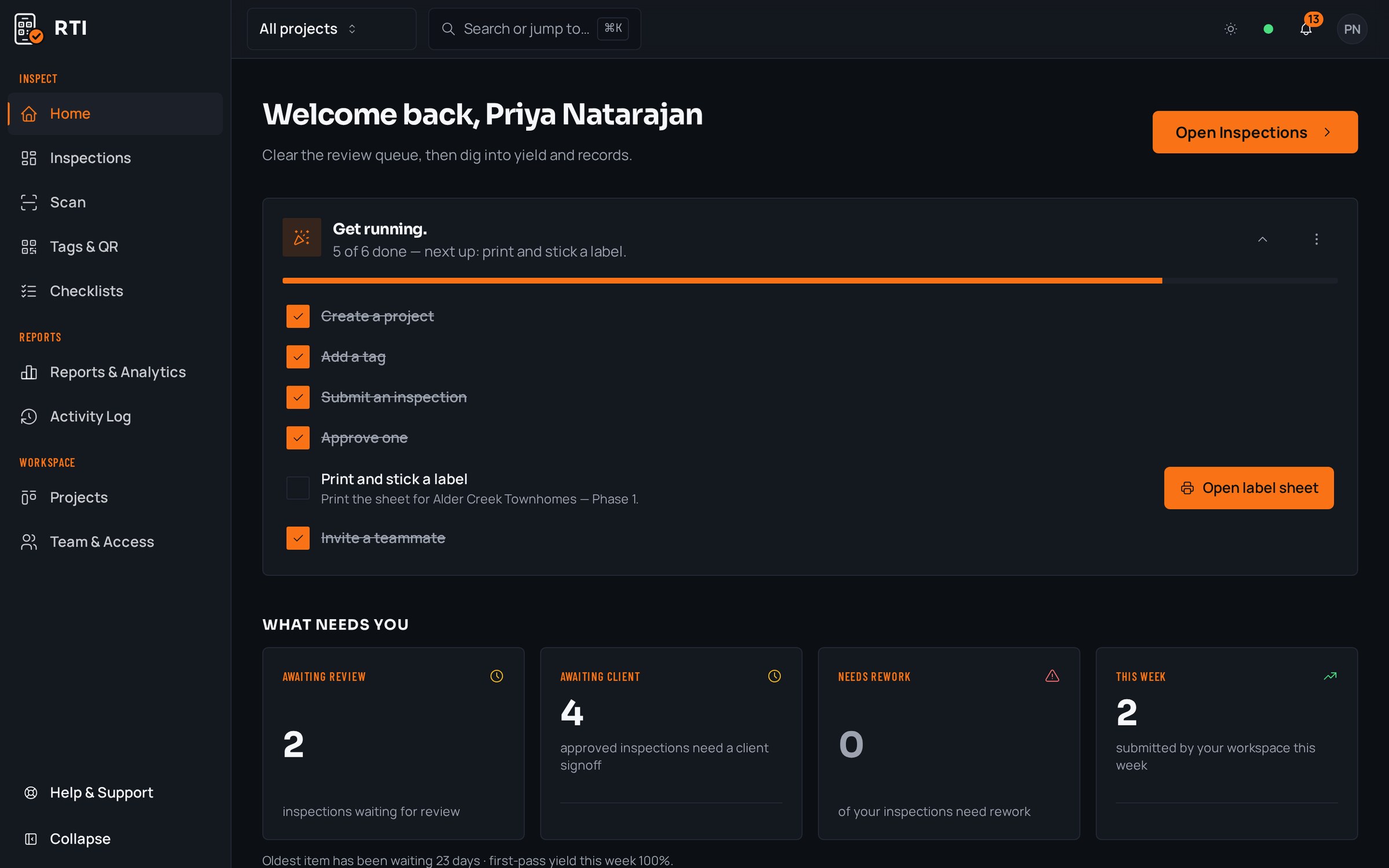
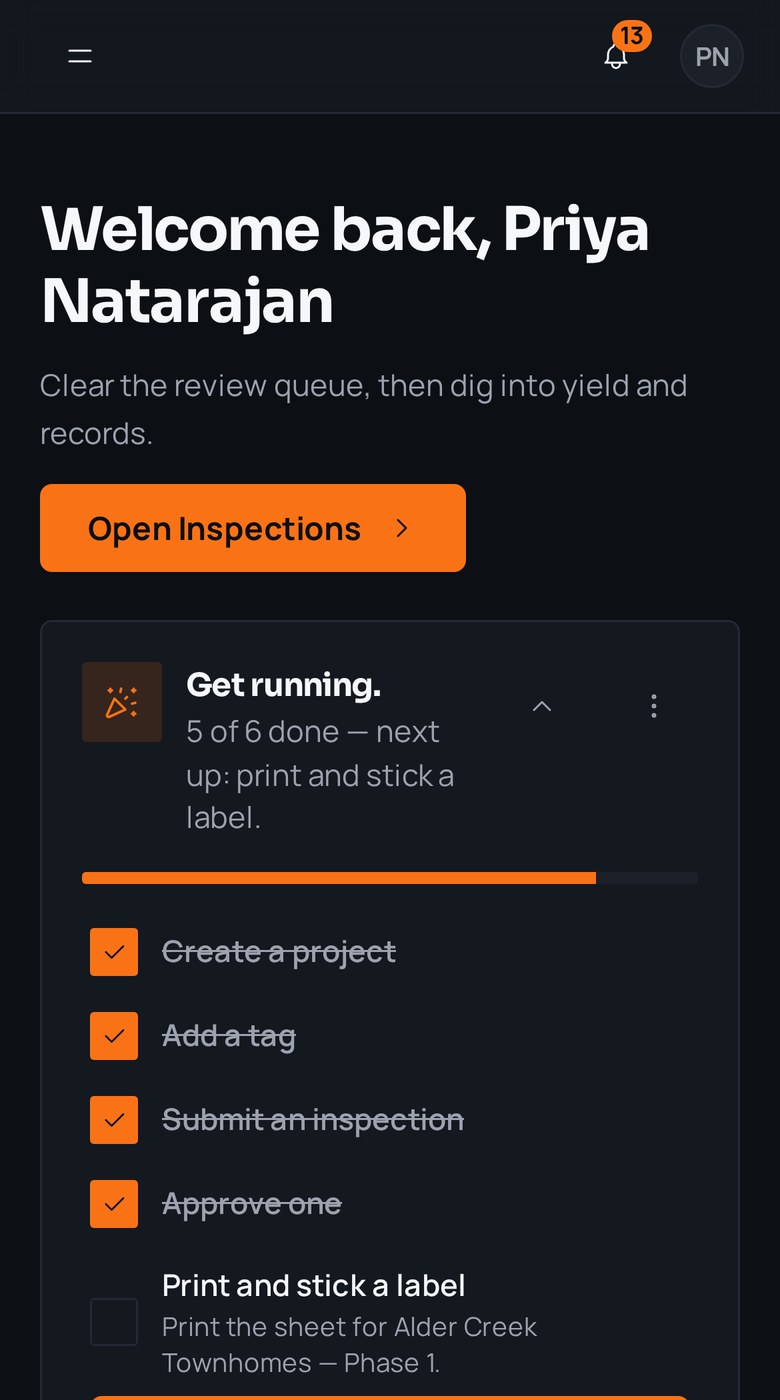
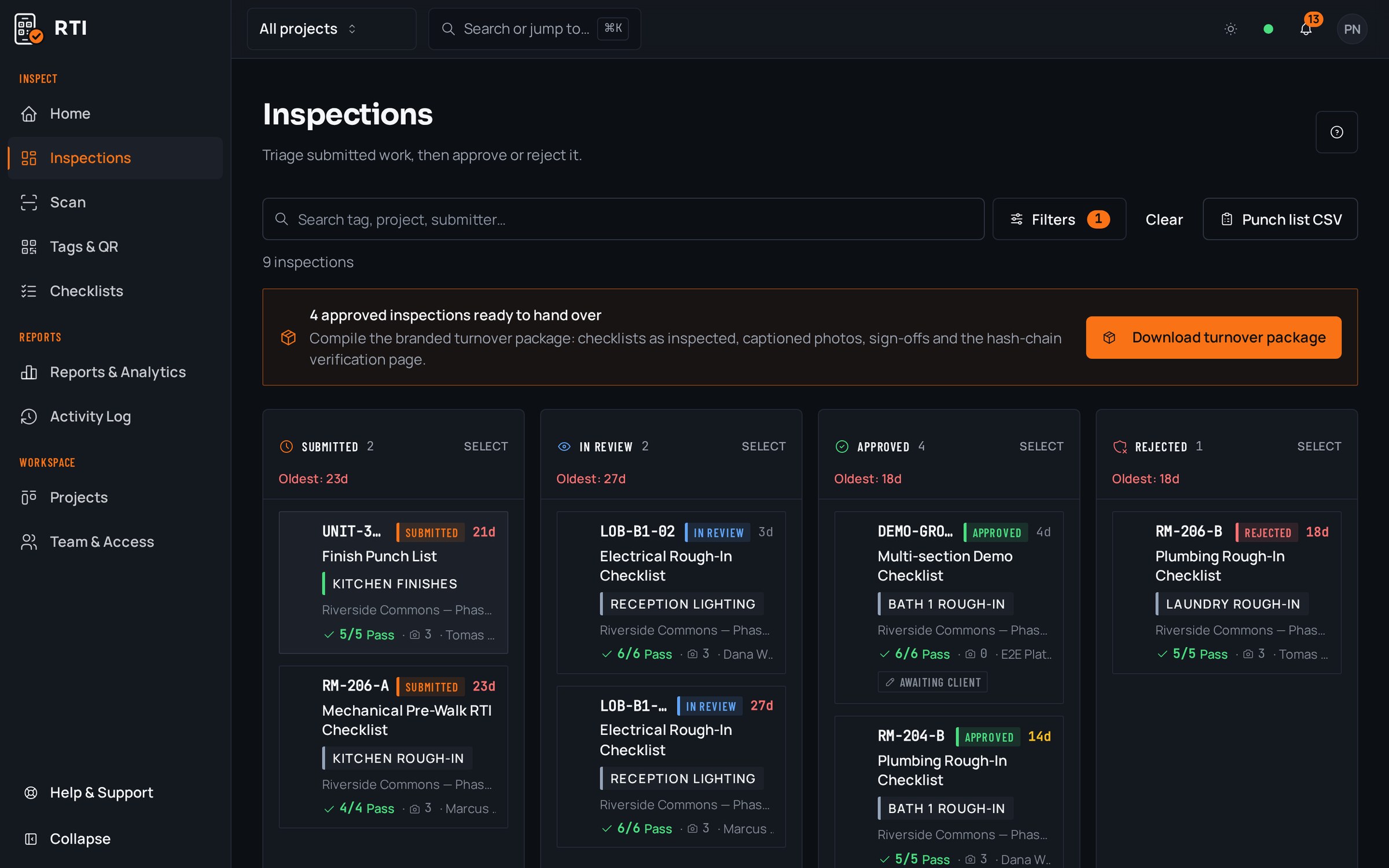
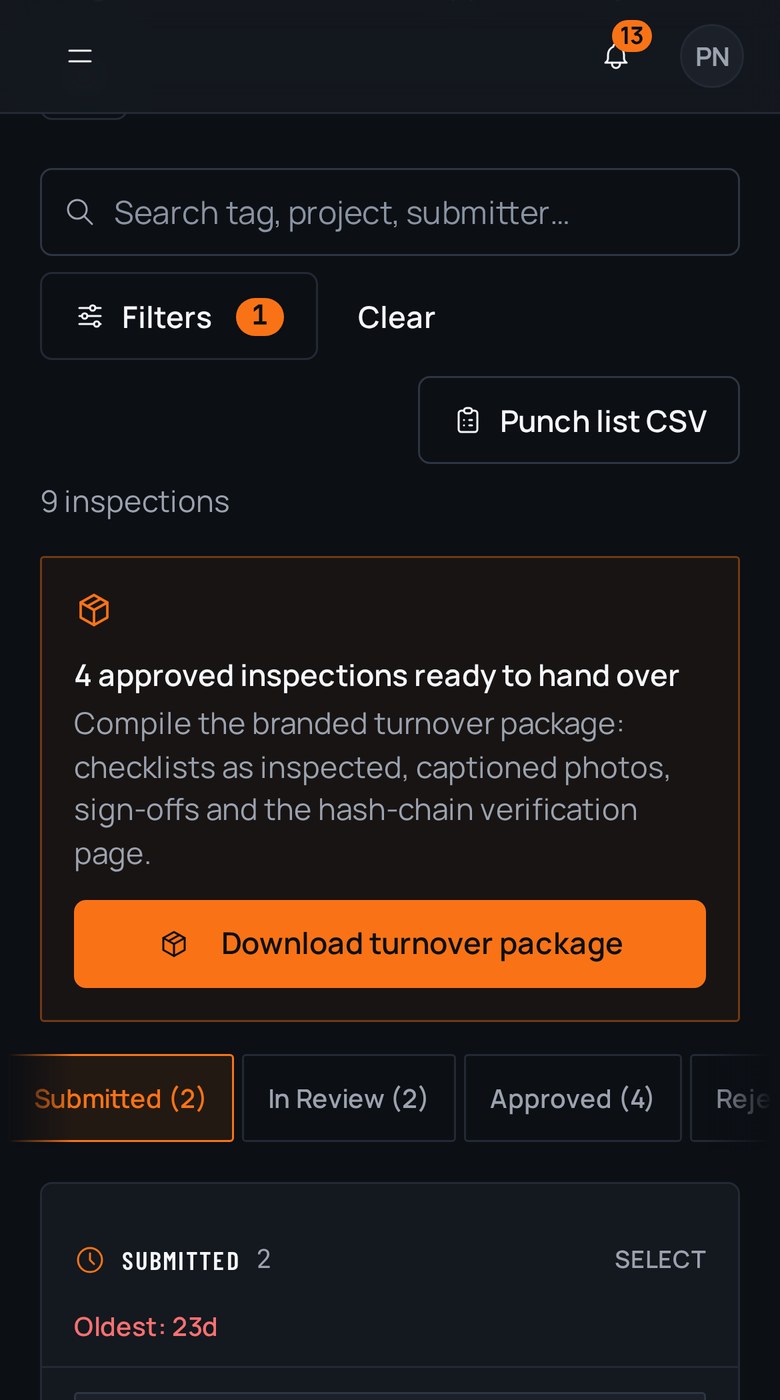

A real inspection point
What this looks like on your job
One tag, one checklist, and the photos that have to come with it.
Tag
RTU-4, Quarterly PM Round
FAC-RTU-04
- Sticker location
- Rooftop mechanical curb, west penthouse
- Bound checklist
- Rooftop unit quarterly preventive maintenance
- Filters replaced, size and date logged on unit2 photos required
- Belts and bearings inspected, tension checked1 photo required
- Condensate drain and pan clear, no standing water2 photos required
- Economizer dampers cycle and seat fully1 photo required
Checklists for your work
Start from a checklist that already knows the walk
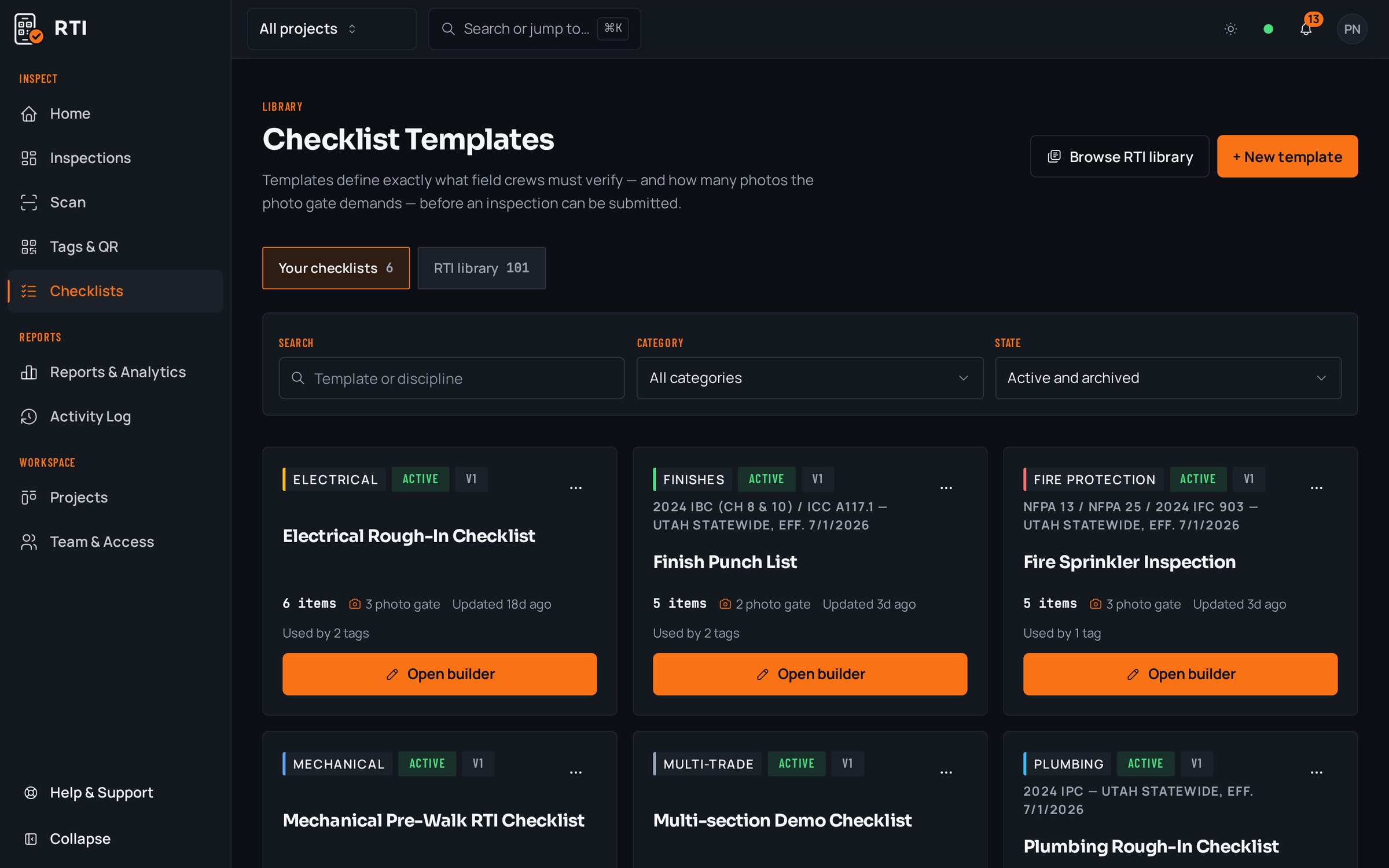
Real guides from the RTI library. Sections in build order, what to look for on each item, and the photos that prove it. Free to read, one click to run on a tag.
- HVACHVAC inspection checklistEquipment set, duct, condensate, controls and startup readings.14 items24 photos
- Roof inspectionRoof inspection checklistDeck through edge metal, including the penetrations that leak first.11 items19 photos
- Fire Protection FinalFire Protection final inspection checklistHeads, escutcheons, spare stock and system interface verified before the AHJ final and turnover6 items9 photos
What gets in the way, and what RTI does about it
Today
The route sheet says the roof round was done, but you have no way to know the tech actually went up instead of closing it from the shop.
With RTI
The round is bound to the QR tag on the unit and won't close until the required photo is attached. A completed item means the tech scanned the equipment and shot it, dated and attributed.
Today
Every month someone rebuilds the same PM list in a spreadsheet, and the small differences between versions make the history impossible to compare.
With RTI
Build the PM checklist once and bind it to the equipment tags. Every recurring round opens the identical list with the identical photo requirement, so months of rounds line up cleanly on the same asset.
Today
When a chiller fails and ownership asks whether it was maintained, your proof is scattered work orders and no photos.
With RTI
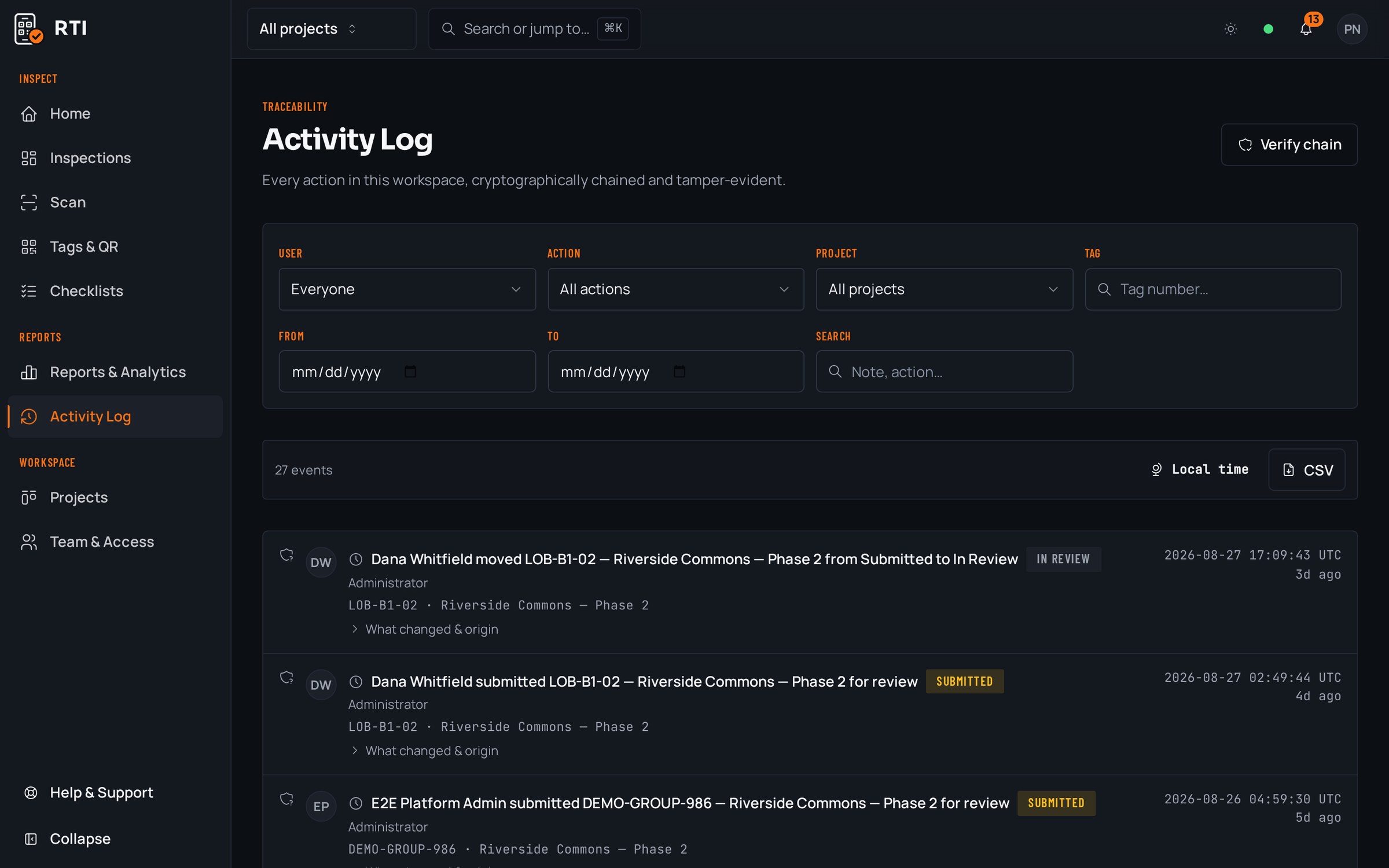
Export the asset's full history as a PDF or CSV, every dated round with its photos, off a SHA-256 log that can't be backfilled. The maintenance record stands as evidence, not as your recollection.
Questions facilities managers ask
- My techs already mark PM rounds complete. Why isn't that enough?
- Because a checkmark on a route sheet doesn't tell you the tech actually stood in front of the RTU. RTI ties each round to the QR tag on the unit and requires the photo before the item can close, so a completed round means the equipment was seen, not that a box was ticked from the truck.
- How do recurring rounds work without rebuilding the checklist every month?
- You build the PM checklist once and bind it to the tags on your equipment. Every month the tech scans the same roof drain or the same fire pump and gets the identical checklist with the identical photo requirement, so this quarter's round is documented exactly like last quarter's.
- When ownership or the insurer asks whether maintenance was kept up, what can I show?
- Export any tag, floor or building as a branded PDF or CSV: every round on that asset, with dates, photos and who performed it. Because the log is hashed with SHA-256, the maintenance history can't be quietly backfilled, so it holds up as proof the PM actually happened.
Put it on a real job.
Tag one area, run one walk, and see the record it leaves behind. Start free. 30 days, no card required.