For project managers
Closeout that builds itself while the job runs.
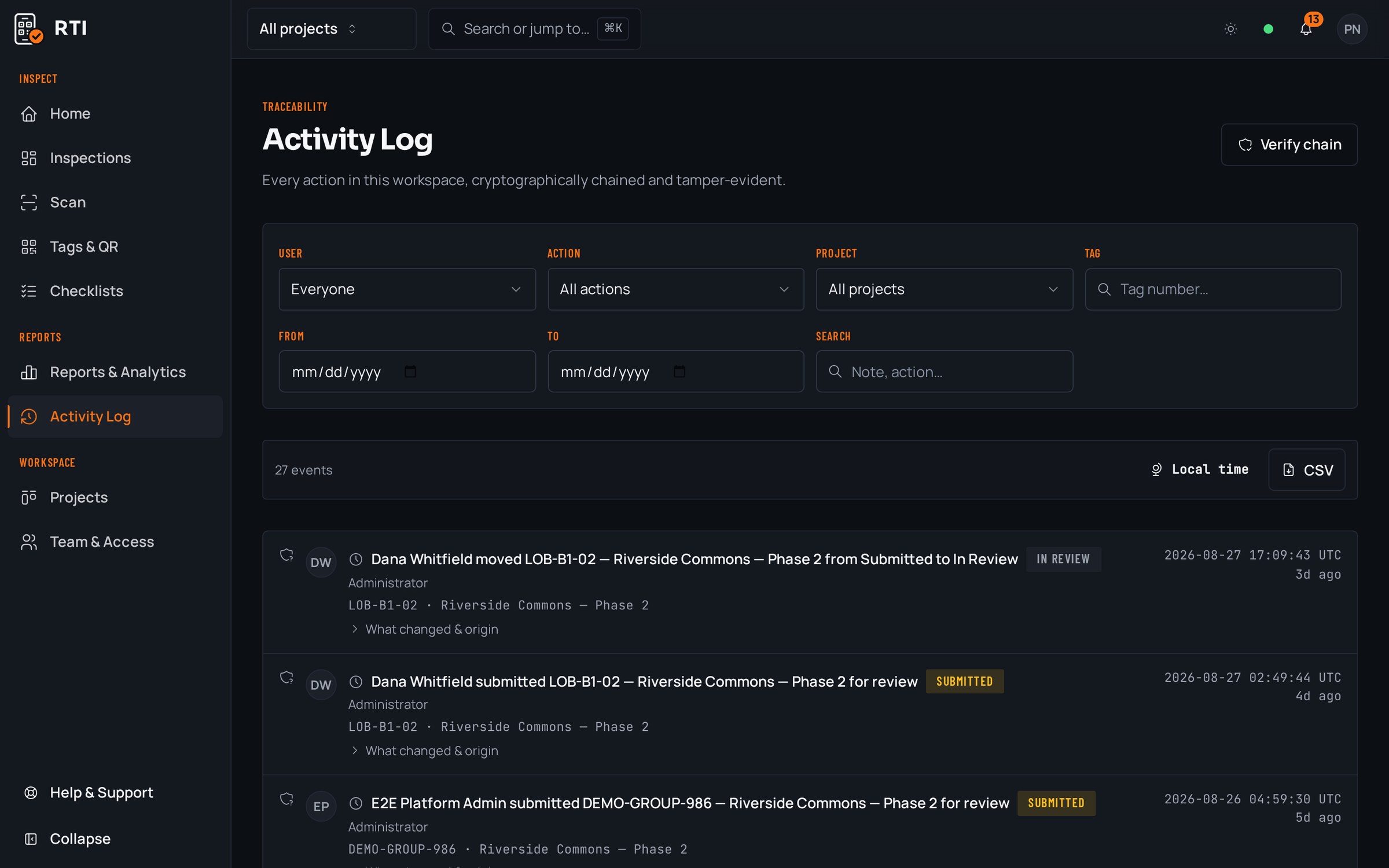
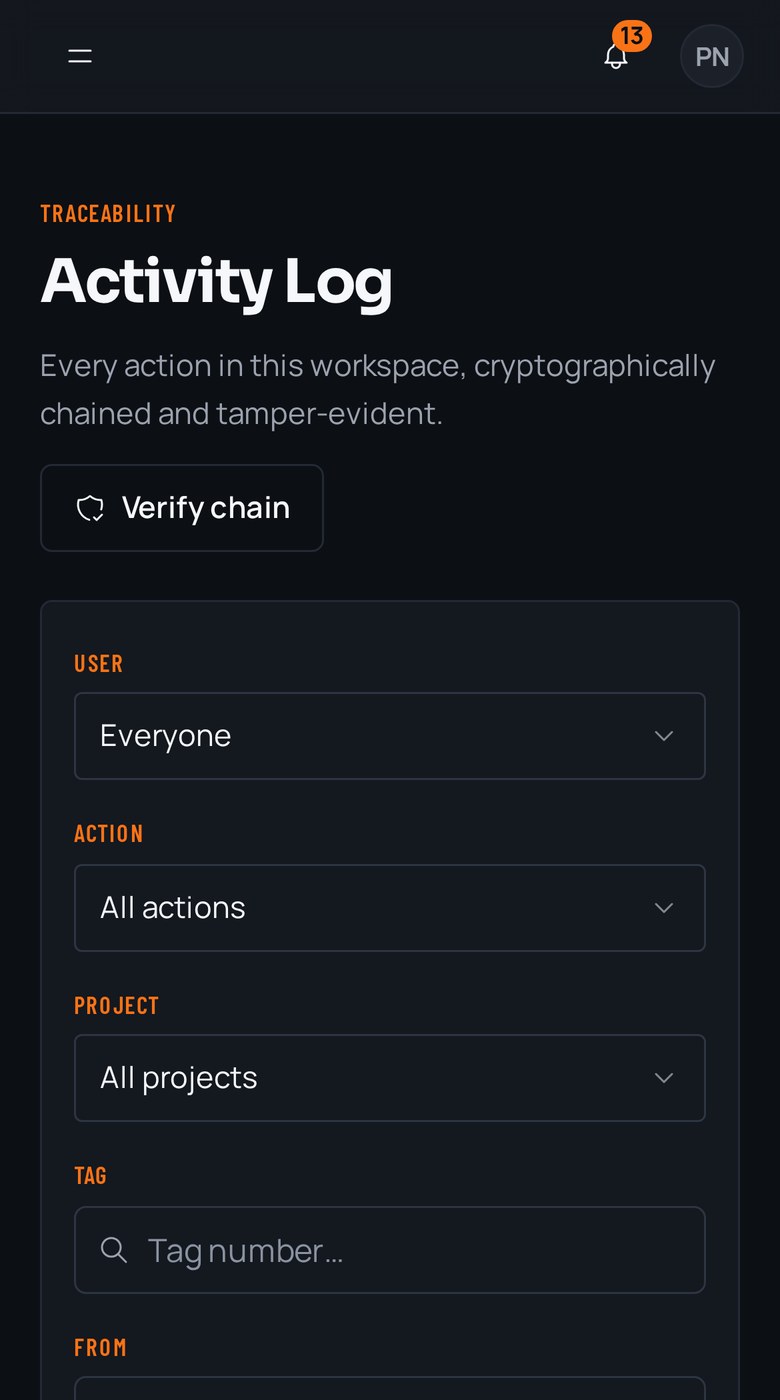
You carry the schedule, the budget and the turnover package. RTI files every signed-off inspection to the record as it happens, so the closeout package is assembling itself in the background and a backcharge argument becomes a dated record instead of a debate.
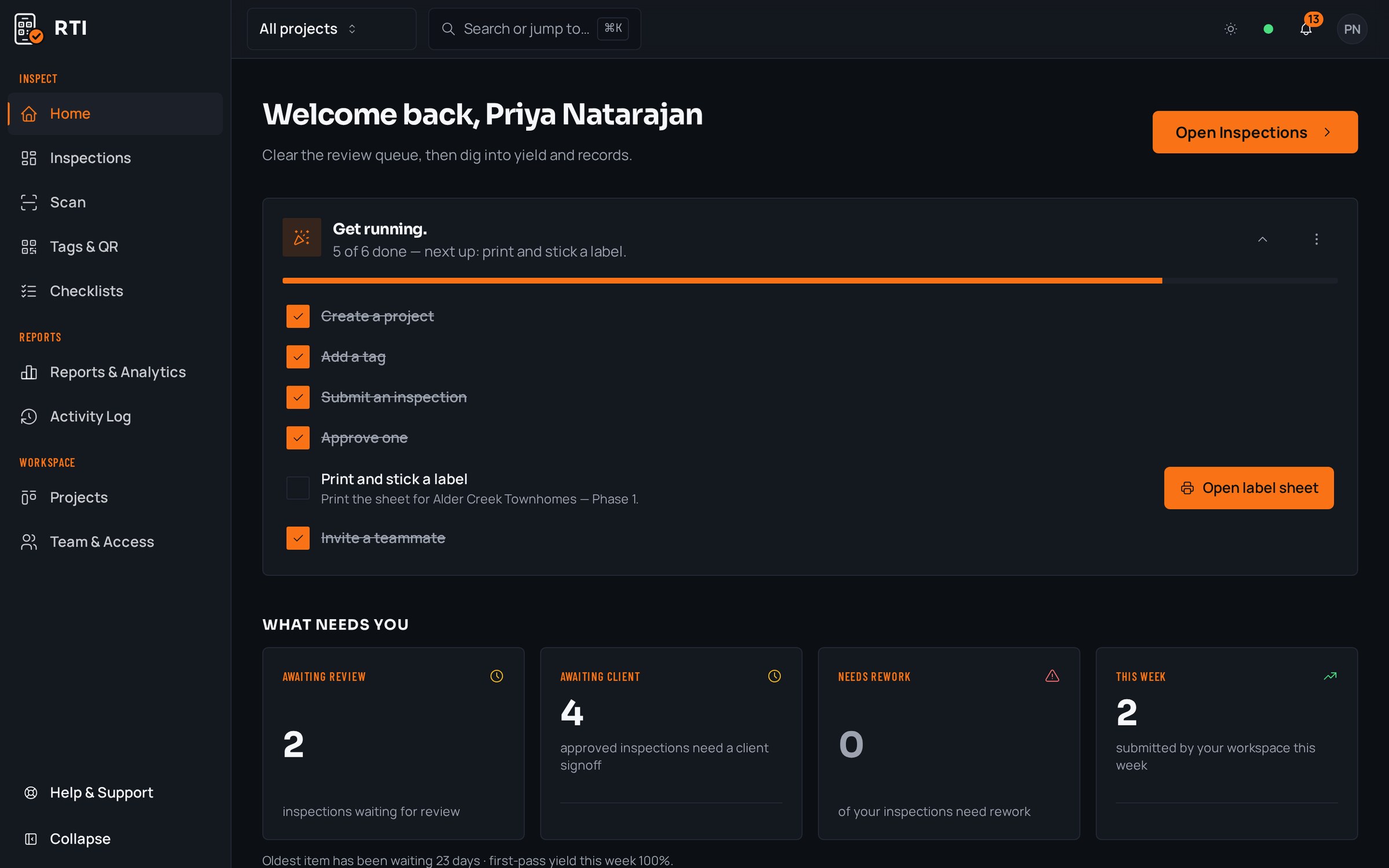
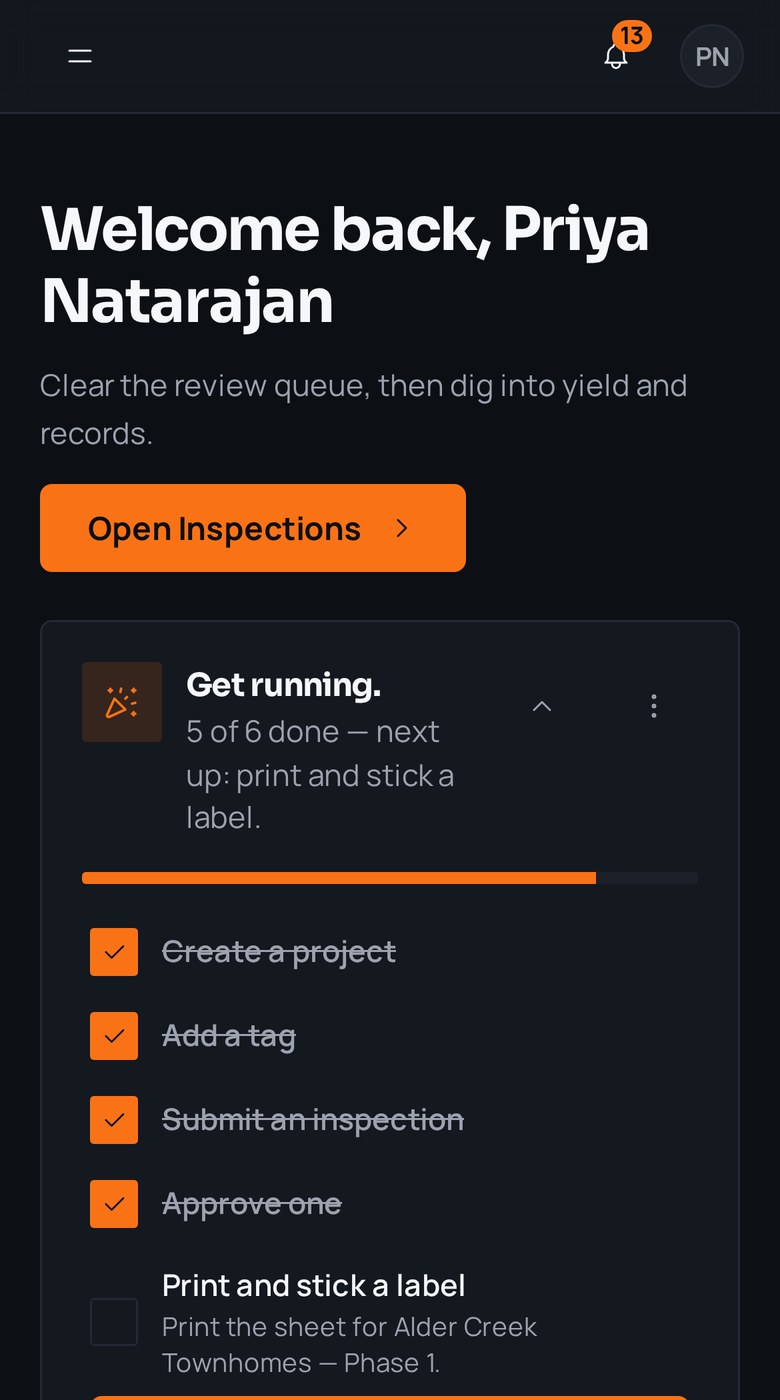
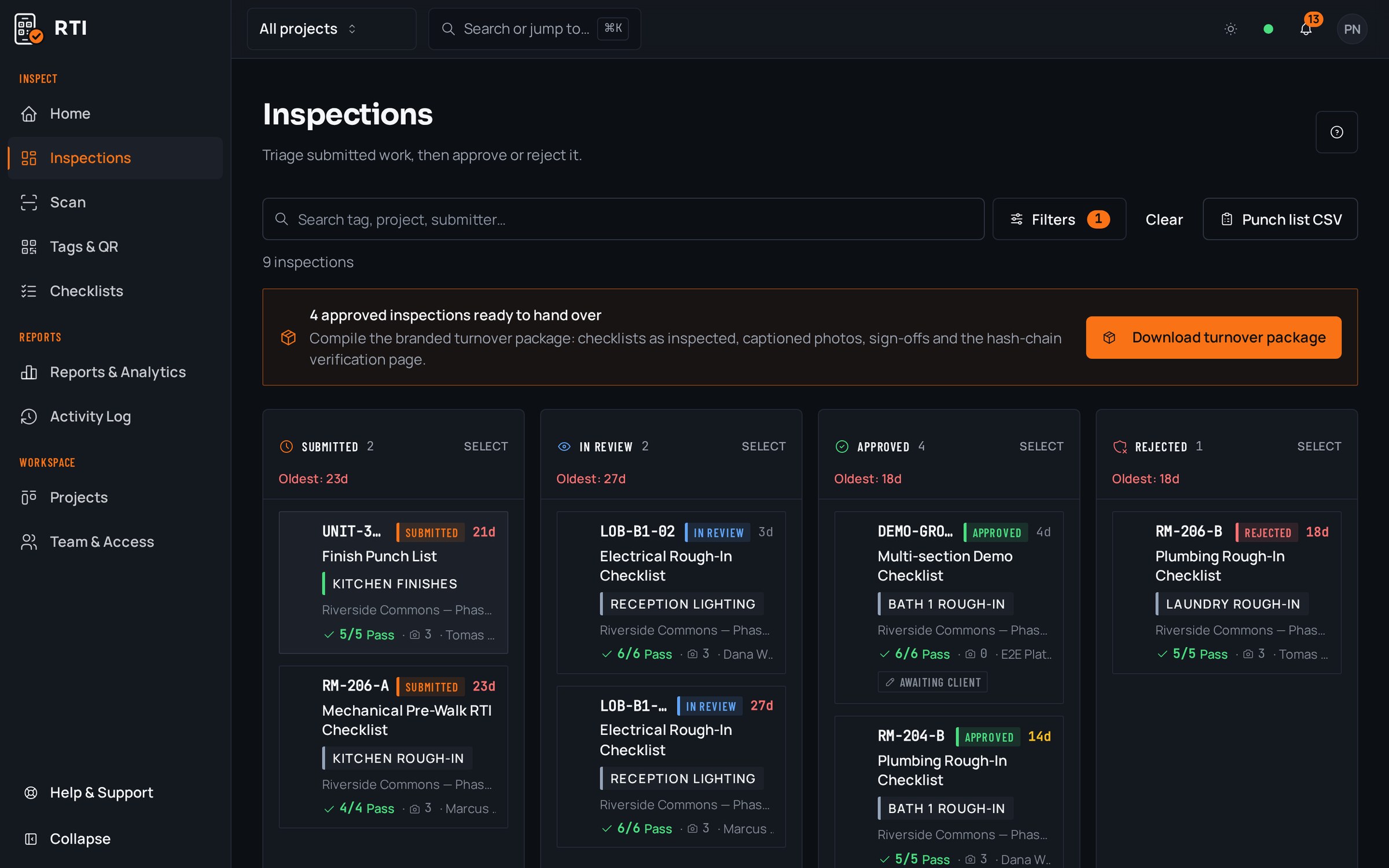
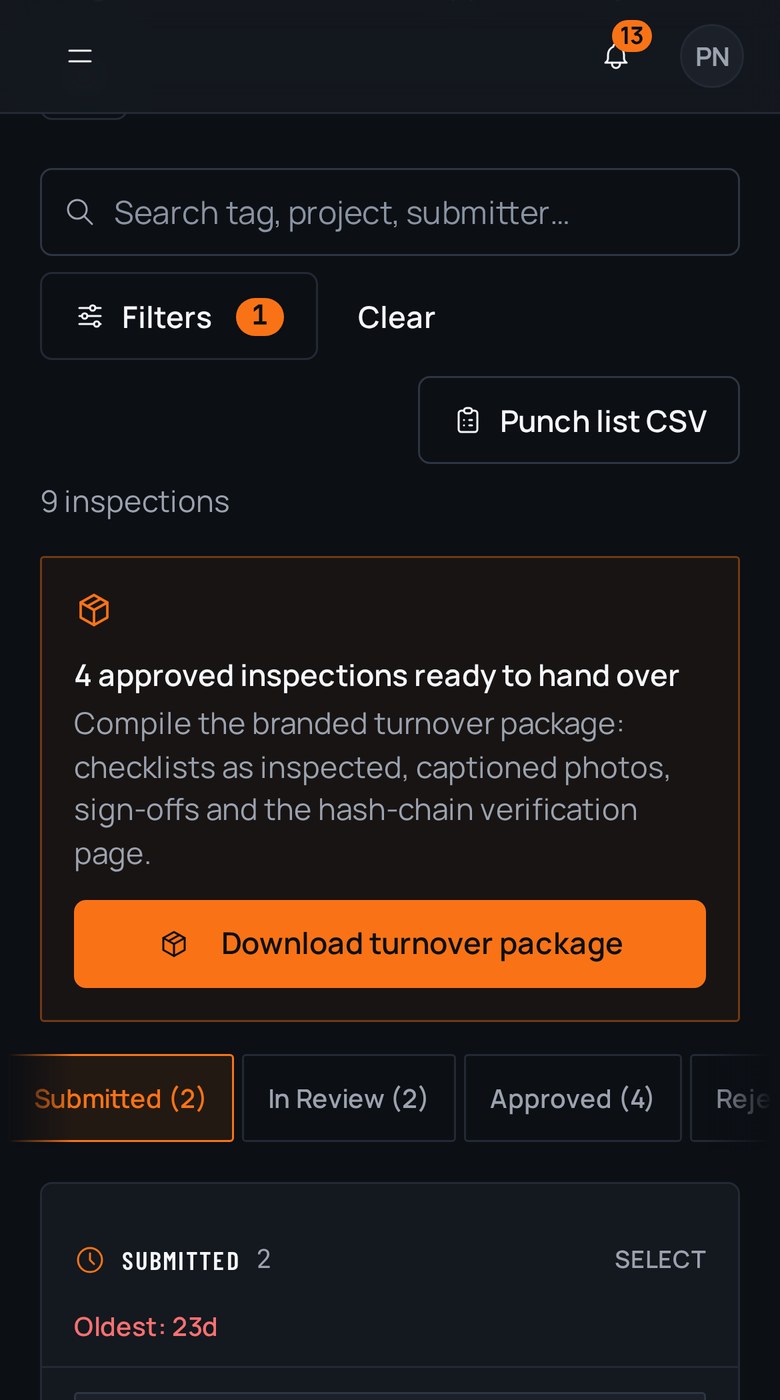
A real inspection point
What this looks like on your job
One tag, one checklist, and the photos that have to come with it.
Tag
Suite 400, Owner Turnover
MOB-4-STE400
- Sticker location
- Inside face of entry door, Suite 400
- Bound checklist
- Final walk, owner turnover
- Punch list items closed and re-verified2 photos required
- All finishes accepted with no visible damage3 photos required
- MEP systems tested and commissioning documents attached1 photo required
- Keys, warranties and O&M manuals logged1 photo required
Checklists for your work
Start from a checklist that already knows the walk
Real guides from the RTI library. Sections in build order, what to look for on each item, and the photos that prove it. Free to read, one click to run on a tag.
- Final inspectionFinal inspection checklist for constructionThe handover walk: systems, life safety, finishes and documentation.15 items25 photos
- Punch listPunch list templateRoom-by-room closeout items with the before-and-after that closes them.15 items21 photos
- QC planConstruction quality control planRoles, definable features of work, three-phase control, nonconformance.12 items15 photos
What gets in the way, and what RTI does about it
Today
The job is substantially complete and now three people spend two weeks pulling photos out of phones and signatures out of inboxes to build the closeout binder.
With RTI
Every approved inspection is already filed to its tag as the work happened. At turnover you export the project as a branded PDF or CSV, complete with answers, photos and signoffs, instead of reassembling it after the fact.
Today
A sub disputes a backcharge months later and it comes down to your word against theirs, with no dated proof of the condition you're charging for.
With RTI
The record shows the tag, the date, the photos and the signature, on a hash-chained log that breaks visibly if anyone edits it. The dispute is settled by the record, not by whoever argues longest.
Today
The owner asks for documentation to release a payment, and answering means chasing the field and the trades for paperwork that lives in five places.
With RTI
The documentation is already on the tags, and the owner can review and sign it from a scoped portal login. You attach the record to the pay application instead of spending a week collecting it.
Questions project managers ask
- Why is closeout always a scramble, and how does RTI change that?
- Because the proof gets created all through the job and collected all at the end, out of camera rolls and email threads. RTI files each inspection to the tag as it's approved, so at turnover the package already exists. You export the project as a branded PDF or CSV instead of rebuilding it from memory.
- How does this help when a sub disputes a backcharge?
- You stop arguing from recollection. Every submission carries the tag, the timestamp, the photos and who signed it, on an activity log that hashes each entry over the last one. What was done, when, and by whom is a dated record, so the conversation is about the record, not about whose memory is better.
- Can the owner sign off without me chasing paper across the team?
- Yes. You give the client a portal login scoped to the projects you choose. They review the evidence and sign off from their phone, and that signoff lands on the same tamper-evident record your team already works from. No emailed PDFs to reconcile later.
Put it on a real job.
Tag one area, run one walk, and see the record it leaves behind. Start free. 30 days, no card required.