Mixed-use
One project, several buildings' worth of standards.
Retail and parking on a concrete podium, apartments framed above it. Mixed-use stacks occupancy types and phases in a single project, each with its own separation ratings and its own inspectors. RTI keeps every one of them on the same record so nothing falls between the trades.

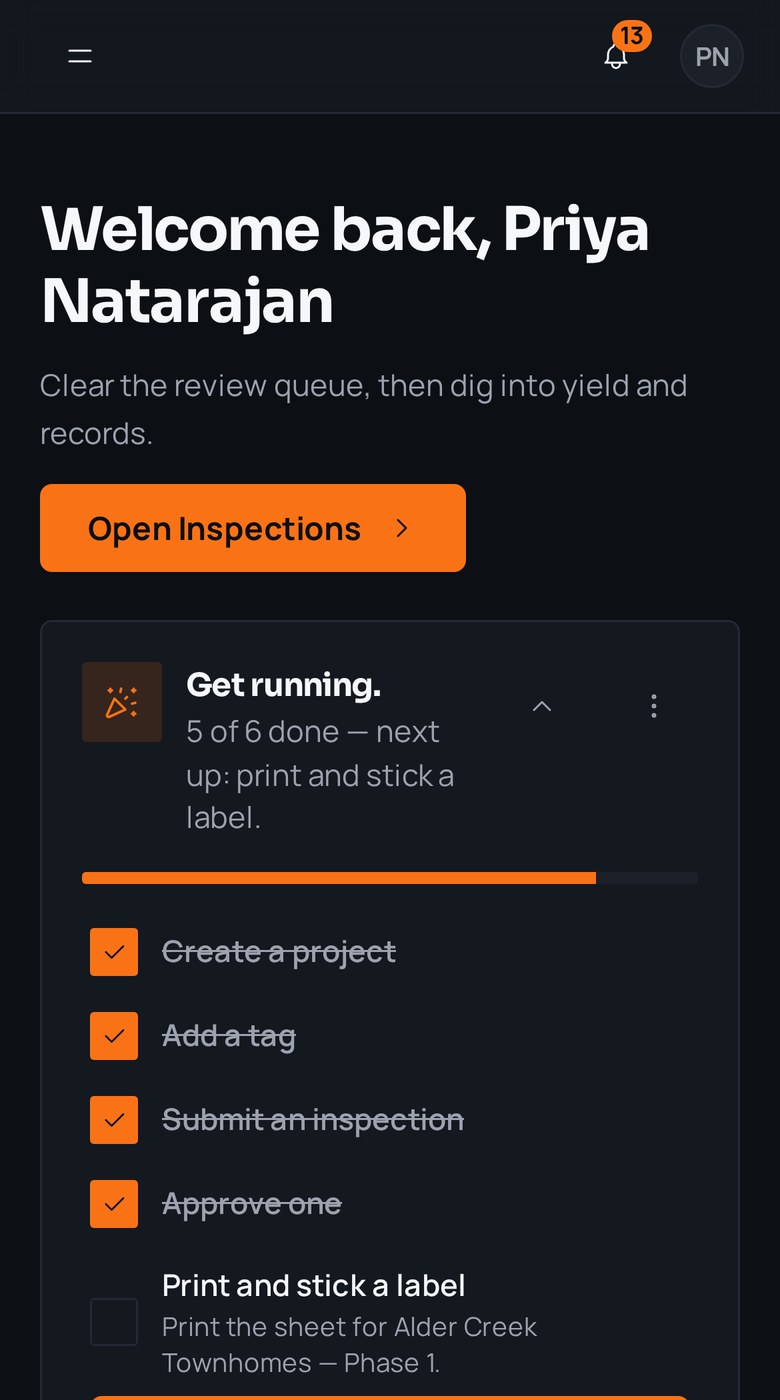
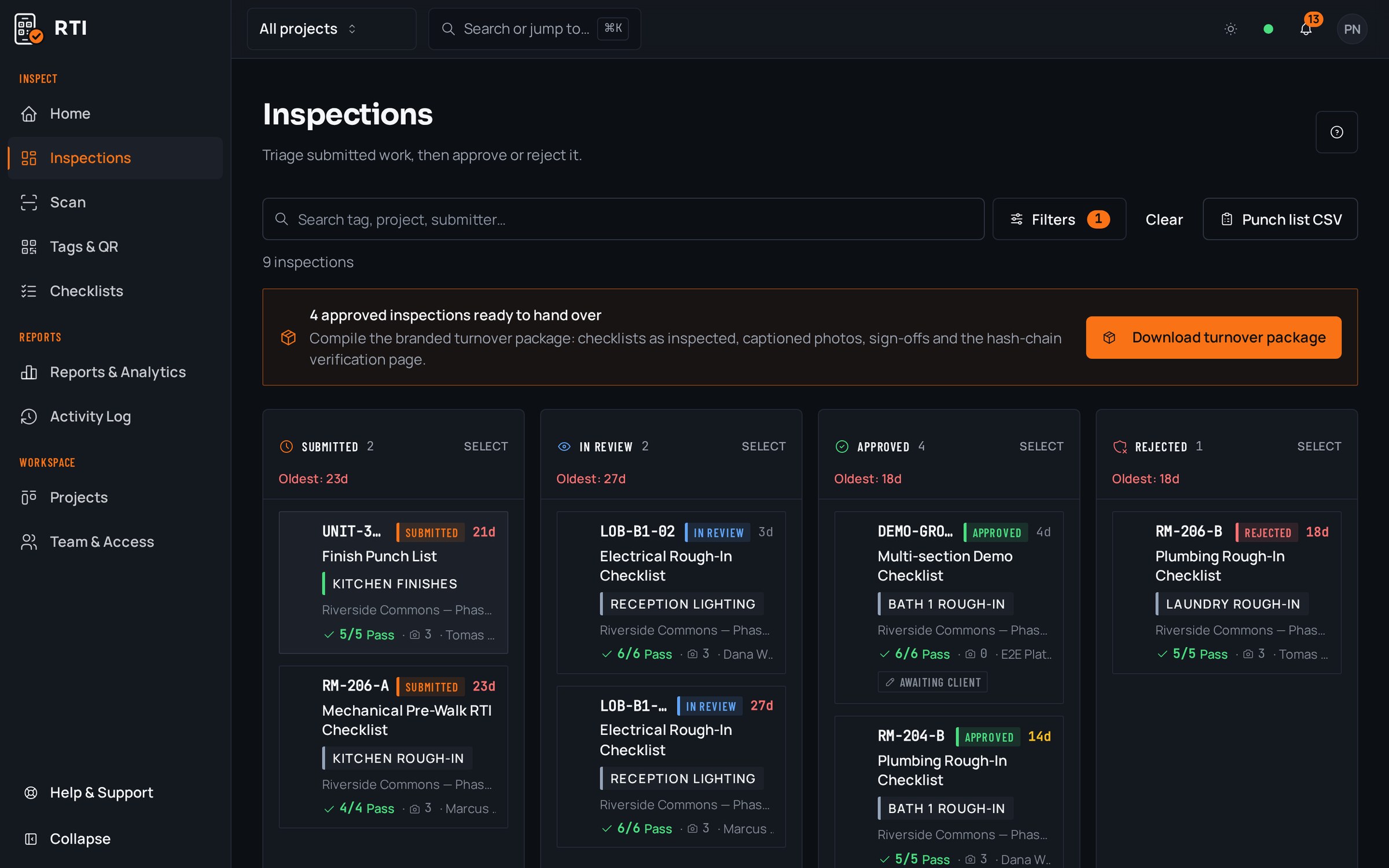
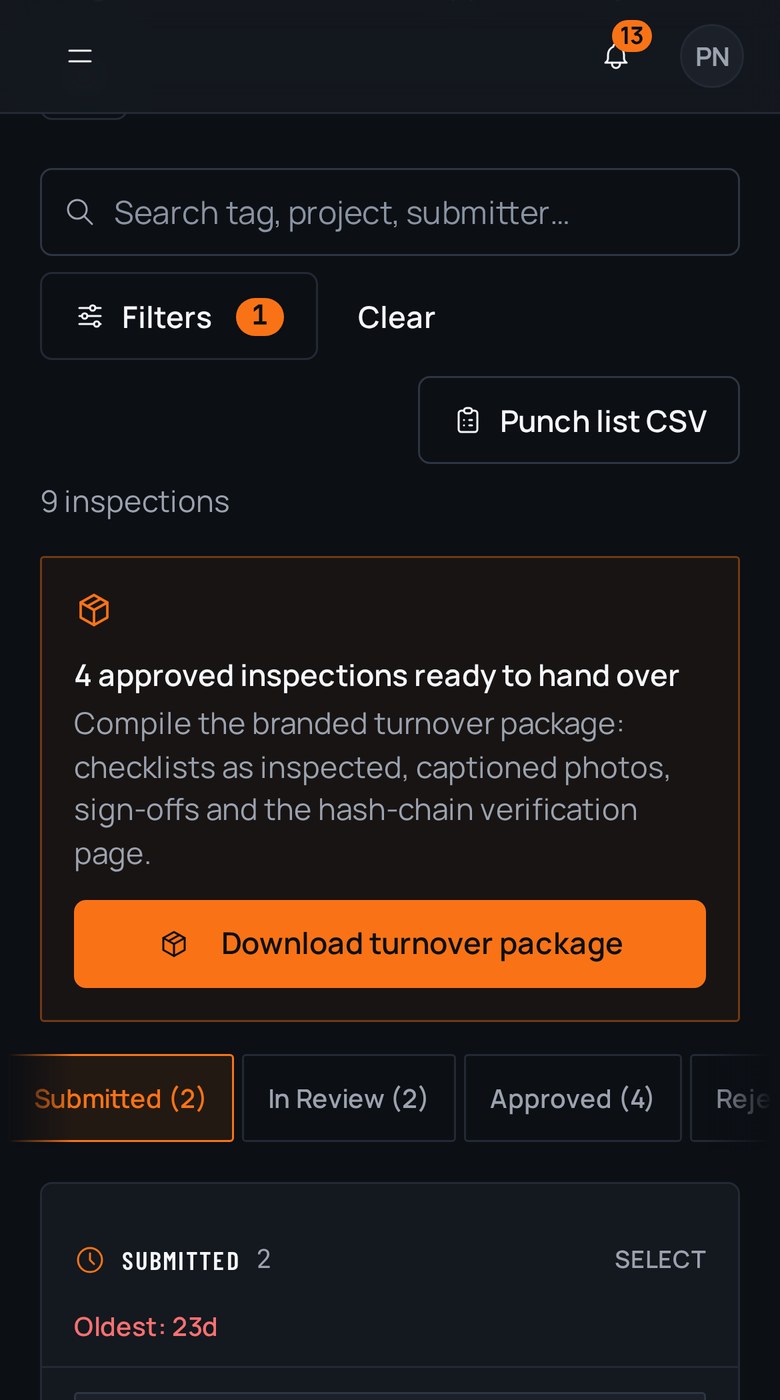
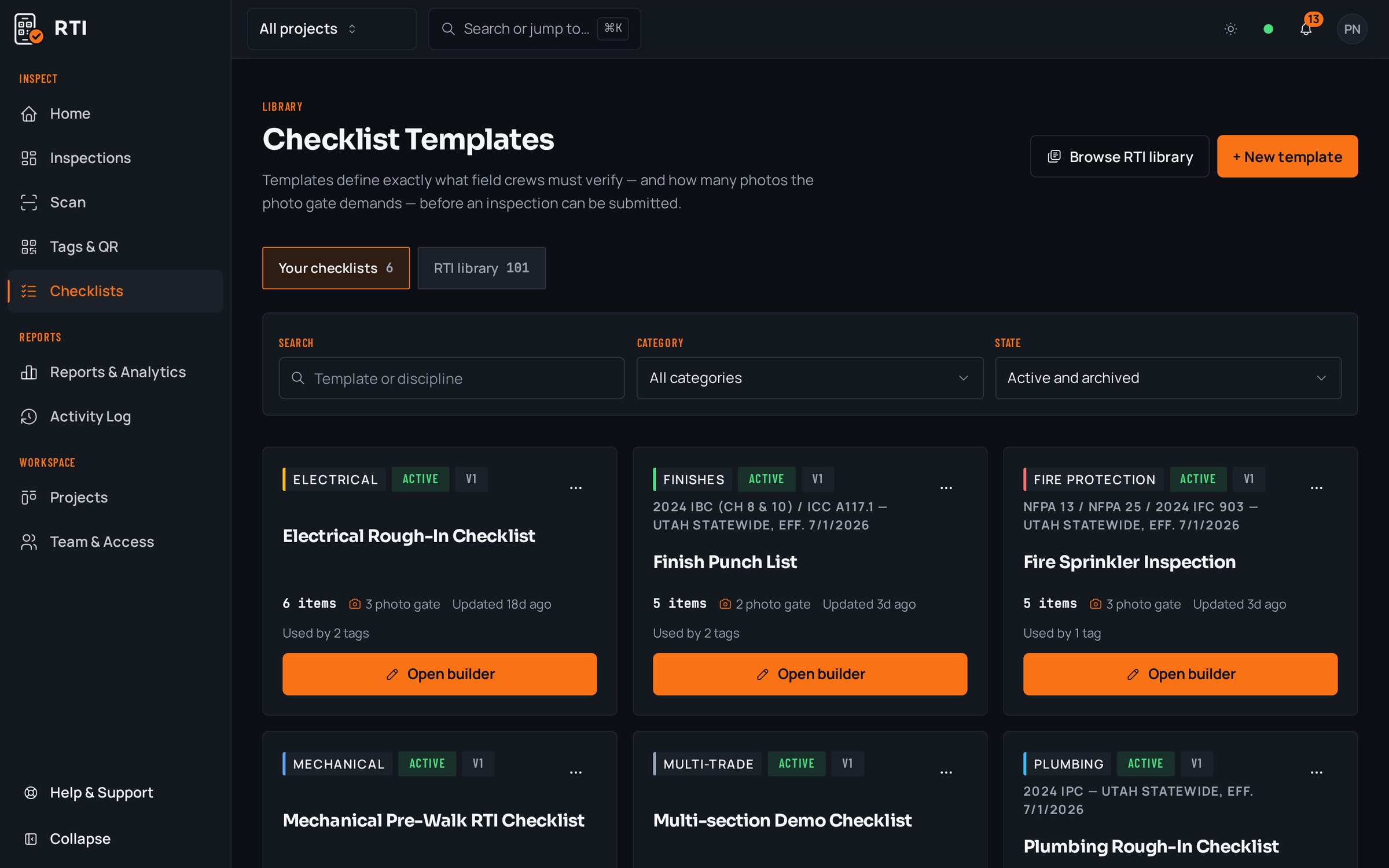


A real inspection point
What this looks like on your job
One tag, one checklist, and the photos that have to come with it.
Tag
Podium Deck — Grid 5-7, over Retail B
MU-PD-5-7
- Sticker location
- Deck level, north stair landing
- Bound checklist
- Podium waterproofing, pre-topping
- Membrane continuous and lapped at deck drains2 photos required
- Flashing turned up and terminated at wall base2 photos required
- Occupancy-separation firestop at deck penetrations2 photos required
- Positive slope formed to drains, no ponding1 photo required
Checklists for your work
Start from a checklist that already knows the walk
Real guides from the RTI library. Sections in build order, what to look for on each item, and the photos that prove it. Free to read, one click to run on a tag.
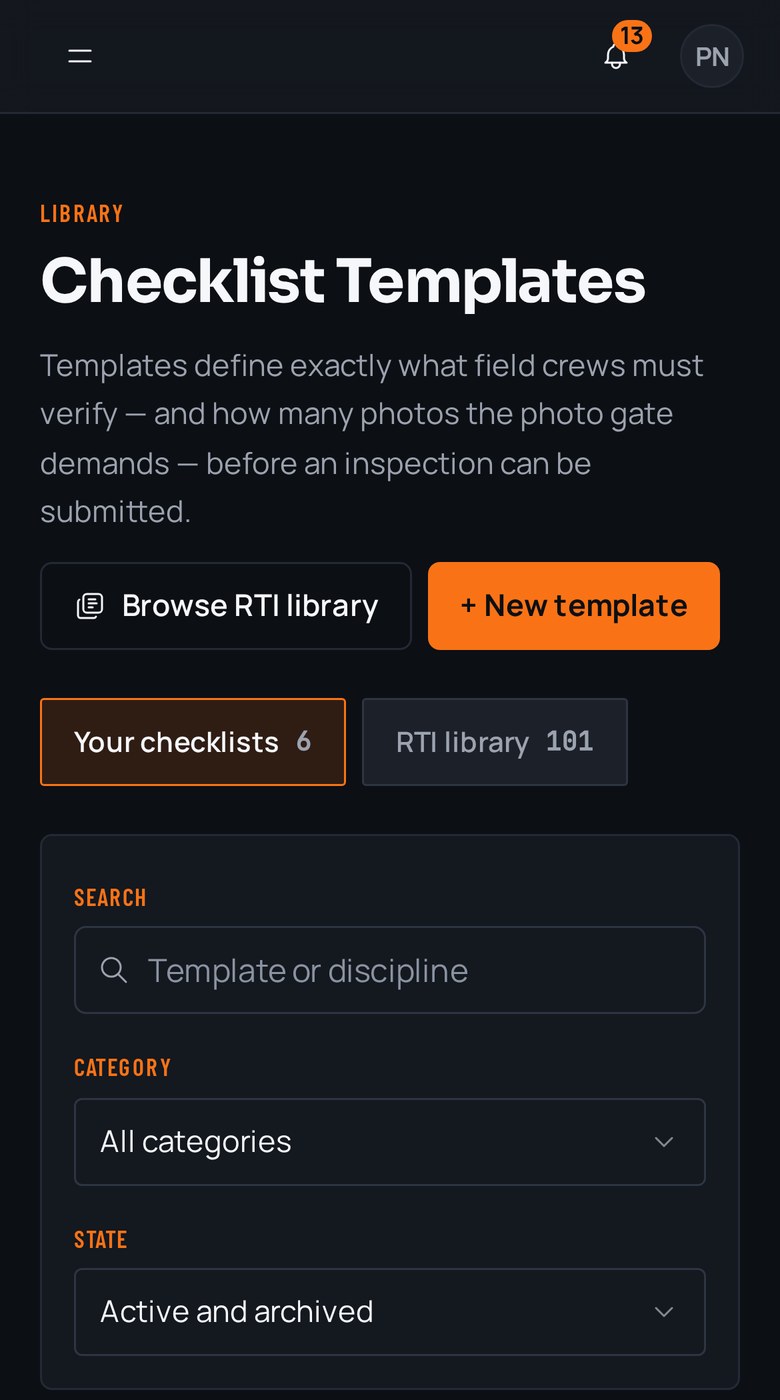
- WaterproofingWaterproofing inspection checklistSubstrate, detailing, membrane, terminations and the flood test.12 items26 photos
- FirestoppingFirestopping inspection checklistRated assemblies, penetrations, joints and listed system compliance.13 items27 photos
- Concrete Pre-pourConcrete pre-pour inspection checklistThe hold-point walk before the pour buries reinforcement, embeds and vapor barrier7 items15 photos
What gets in the way, and what RTI does about it
Today
The podium deck separates apartments from the retail below, but the waterproofing is buried under topping before anyone documents it.
With RTI
The deck is tagged bay by bay and the membrane submission cannot close until the drain, flashing and termination photos are attached, so the proof exists before the topping goes down.
Today
Three occupancy types mean three sets of rules and three inspectors, and the separation between them is where things fall through the cracks.
With RTI
Each occupancy-separation assembly carries its own tag and checklist, so the rated firestop between parking, retail and residential is evidenced at the assembly, not assumed at the interface.
Today
The retail wants to open before the residential floors top out, and pulling one clean closeout out of a shared pile is a fight.
With RTI
Each phase is its own set of tags on the review board, so the retail exports and hands over on its own timeline while the residential tags stay open above it.
Questions mixed-use ask
- The podium is occupied retail with apartments above. How is the deck waterproofing proven?
- The podium-deck membrane is tagged bay by bay, and each submission requires the photos of the membrane at drains, flashing and terminations before it can close. The water separating residents above from retail below is documented while it is exposed, not after the topping slab covers it.
- Different occupancies mean different separation ratings. Can one system hold all of them?
- Yes. Each occupancy-separation and horizontal-assembly firestop location carries its own tag and checklist, so the rated separation between parking, retail and residential is evidenced at the assembly. Build the checklist once and bind it wherever that rating repeats.
- The retail opens while the residential floors are still going up. Does the record handle phasing?
- It does. Each phase is its own set of tags and submissions on the review board, so the retail closeout package exports and hands over on its own timeline while the residential tags stay open above, all on one project record.
Put it on a real job.
Tag one area, run one walk, and see the record it leaves behind. Start free. 30 days, no card required.