Parking structures
A deck that has to shed water for fifty years.
A parking structure is exposed concrete taking traffic, chlorides and weather for decades. Post-tensioned pours, traffic coating, expansion joints and drainage all have to be right, because there is no ceiling to hide them behind. RTI captures the proof at each pour and each joint.
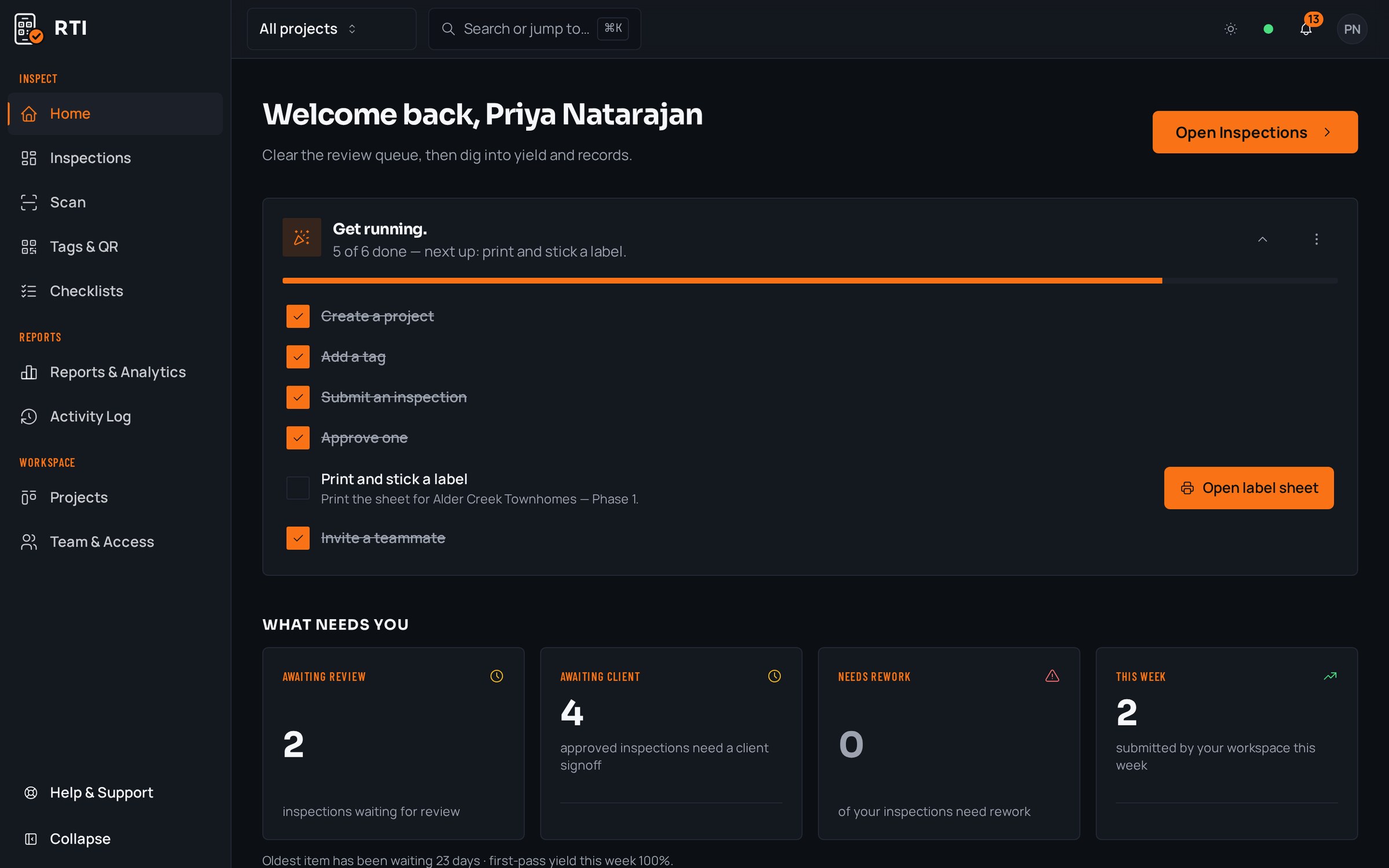
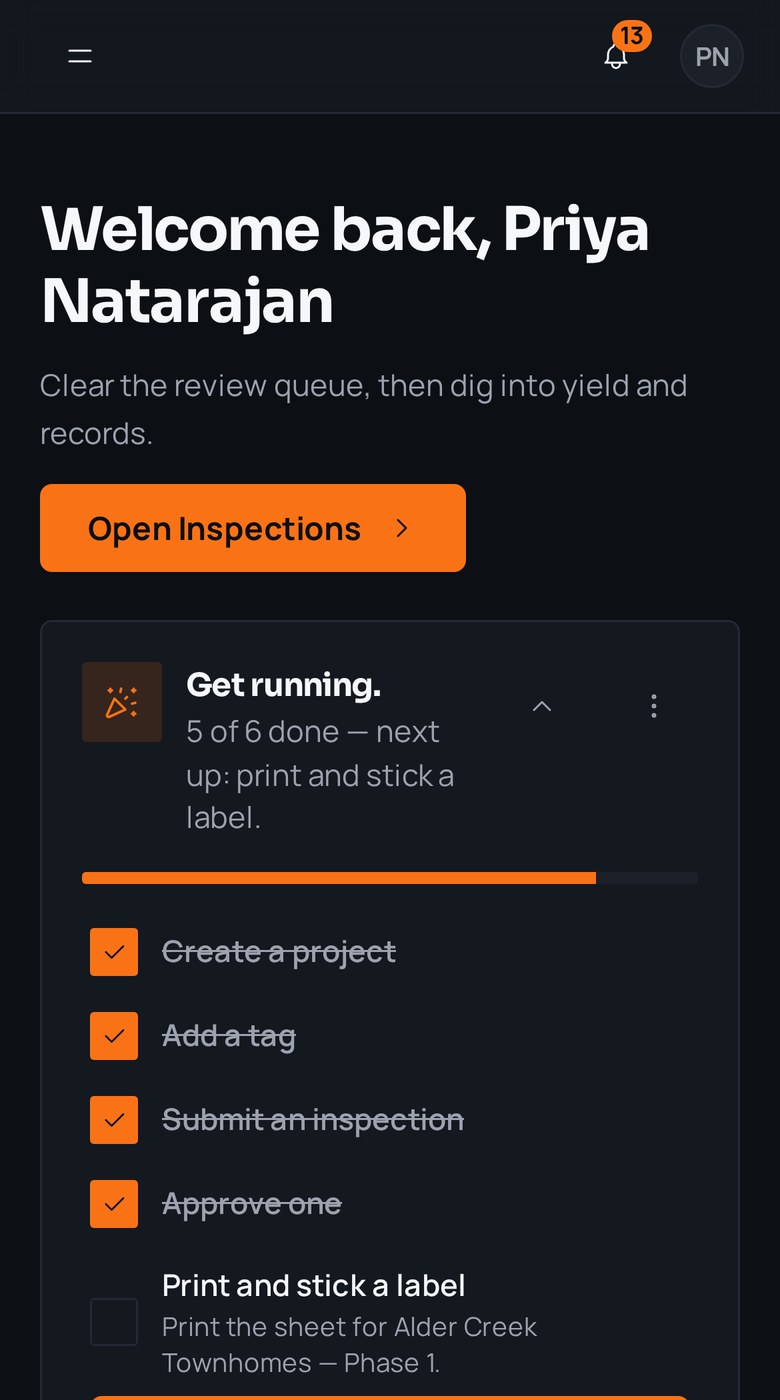
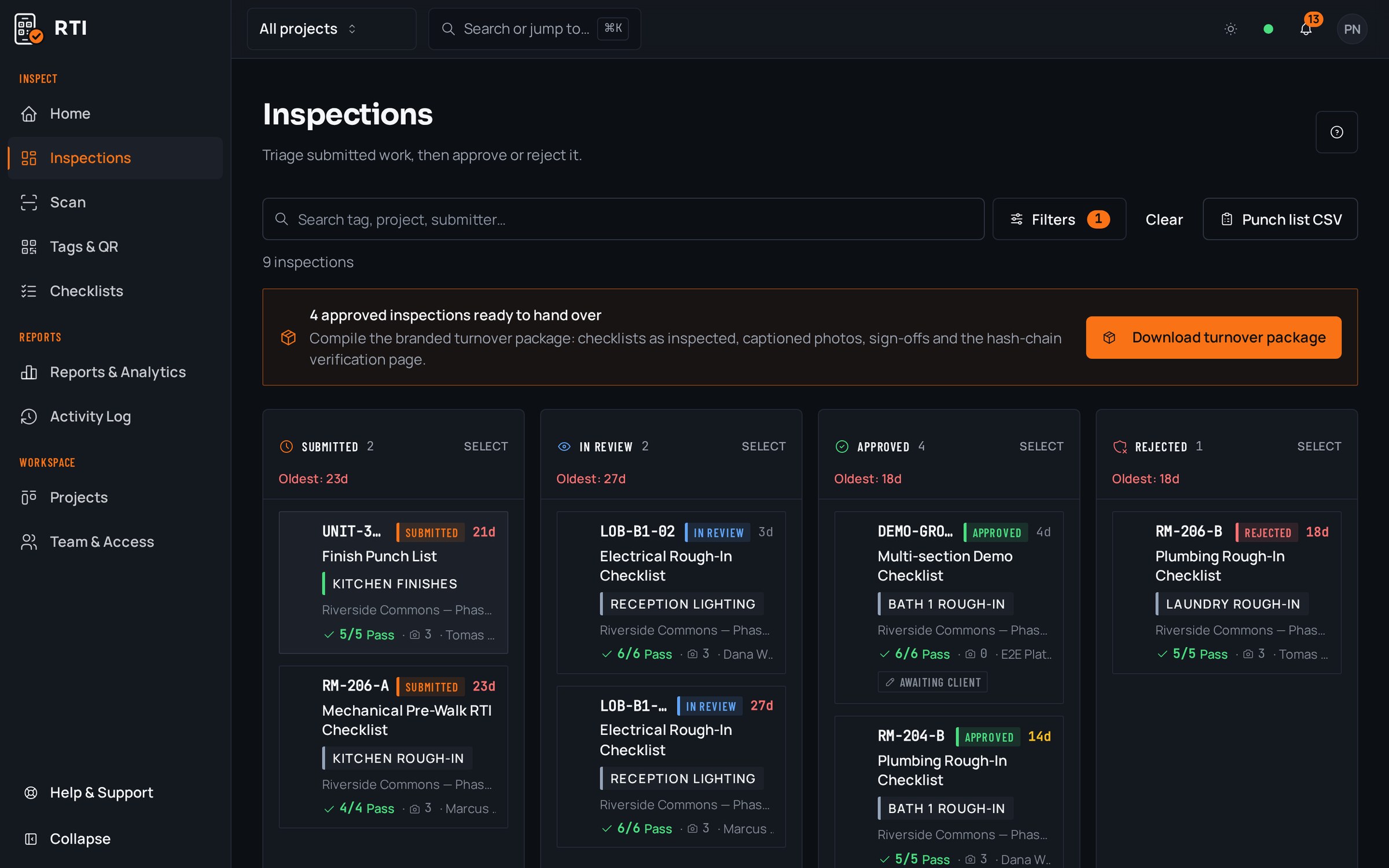
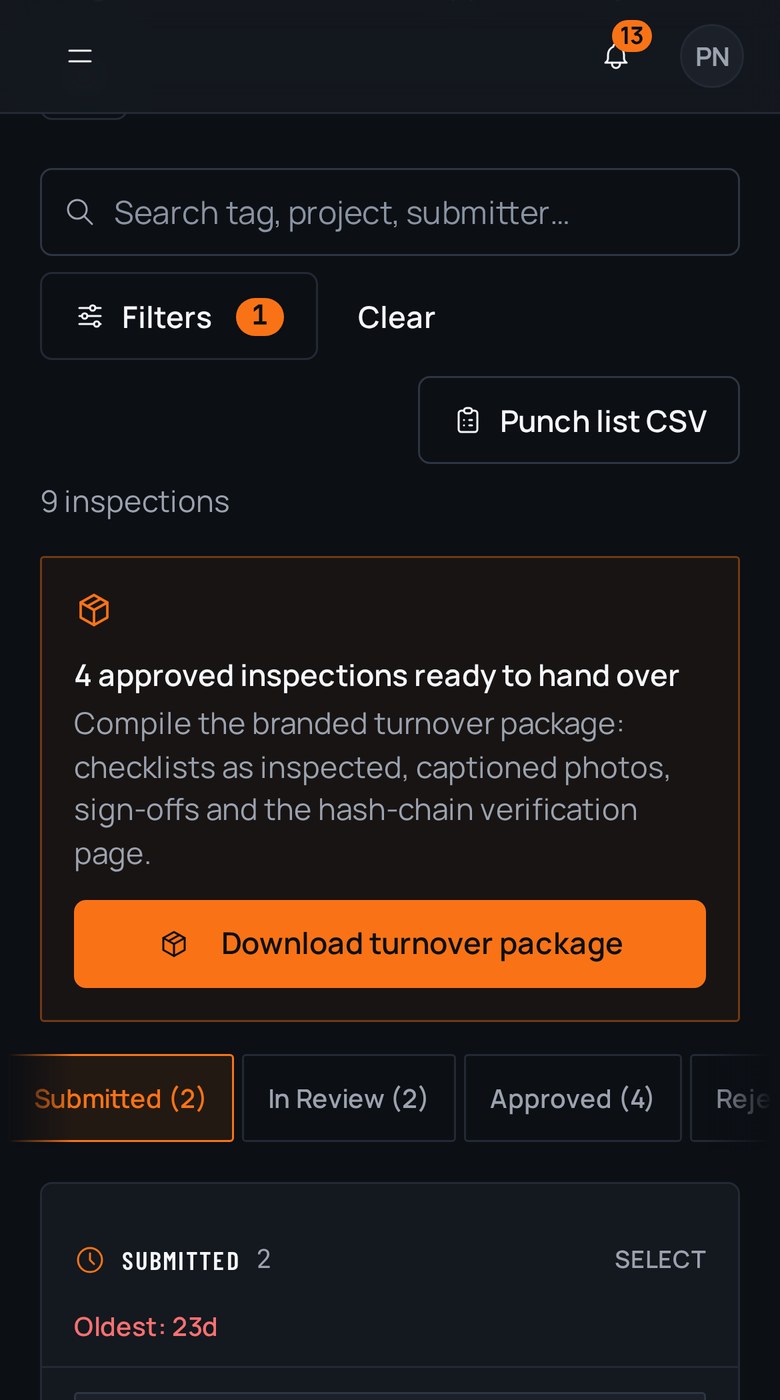




A real inspection point
What this looks like on your job
One tag, one checklist, and the photos that have to come with it.
Tag
Level 3 Deck, Pour 2 — Bays G-J
PS-L3-P2-GJ
- Sticker location
- Deck edge form at column line G
- Bound checklist
- Post-tensioned slab, pre-pour
- Tendon profile chaired to marked heights2 photos required
- Stressing anchors and pocket formers set2 photos required
- Embed plates located and secured to form1 photo required
- Deck slope and drains formed, low points clear1 photo required
Checklists for your work
Start from a checklist that already knows the walk
Real guides from the RTI library. Sections in build order, what to look for on each item, and the photos that prove it. Free to read, one click to run on a tag.
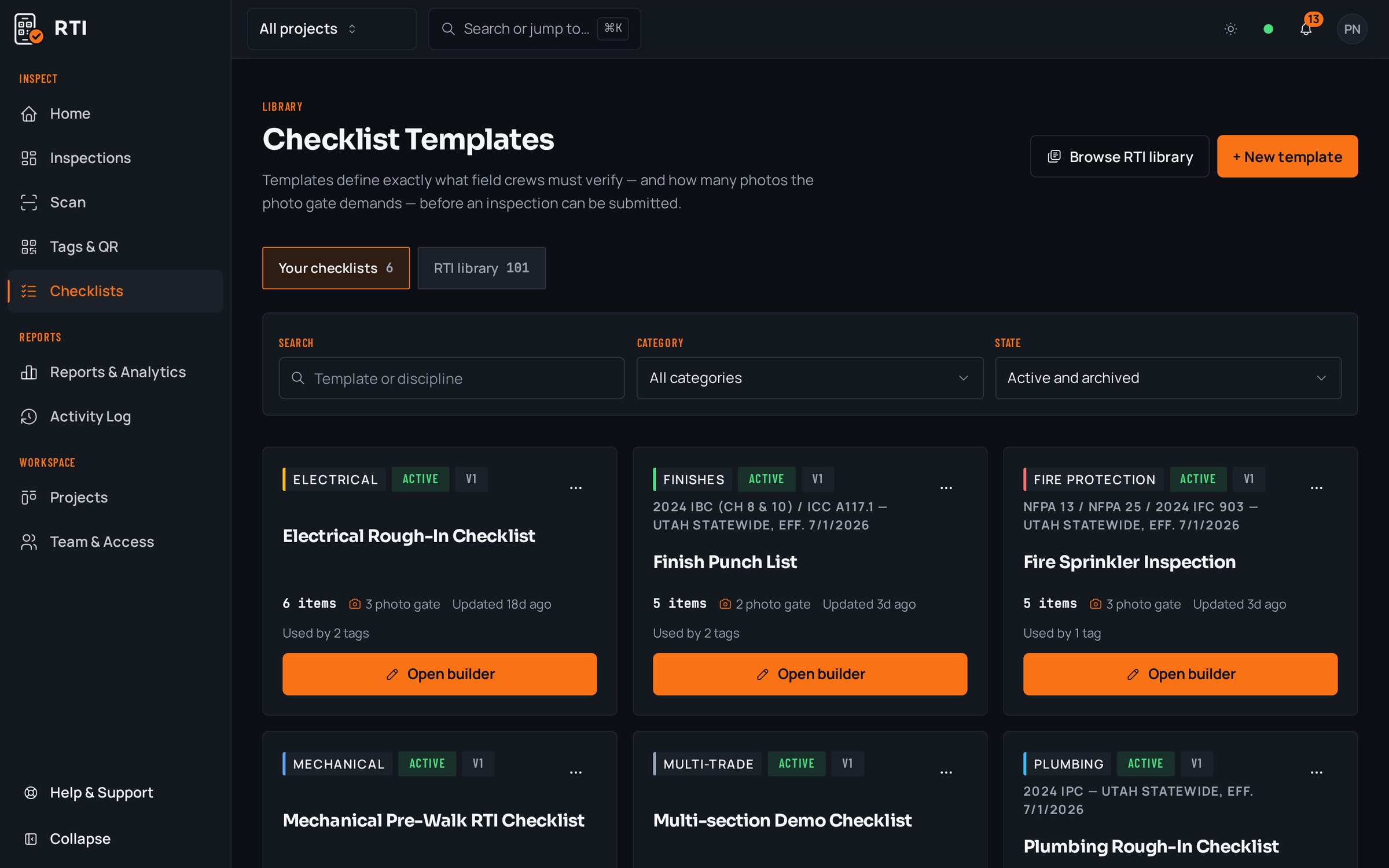
- Pre-pourPre-pour concrete checklistSubgrade, formwork, rebar, embeds and cover before the truck arrives.13 items23 photos
- WaterproofingWaterproofing inspection checklistSubstrate, detailing, membrane, terminations and the flood test.12 items26 photos
- Structural steelStructural steel inspection checklistAnchorage, erection tolerance, bolting, welding and coatings.12 items27 photos
What gets in the way, and what RTI does about it
Today
Once the deck is poured, there is no way to prove the tendons and embeds were where the drawings put them.
With RTI
The pre-pour submission is photo-gated on the tendon profile, anchors and embeds, so the proof is captured at the one moment it can be, before the concrete covers it.
Today
Traffic coating and expansion joints get called done, then leak into the level below a year later with no record of how they were prepped.
With RTI
The coating and each joint carry required photos of substrate, application and seal, so the durability work is documented on the deck, not reconstructed after the first leak.
Today
A deck-repair dispute lands years out and the paper trail is a folder nobody trusts.
With RTI
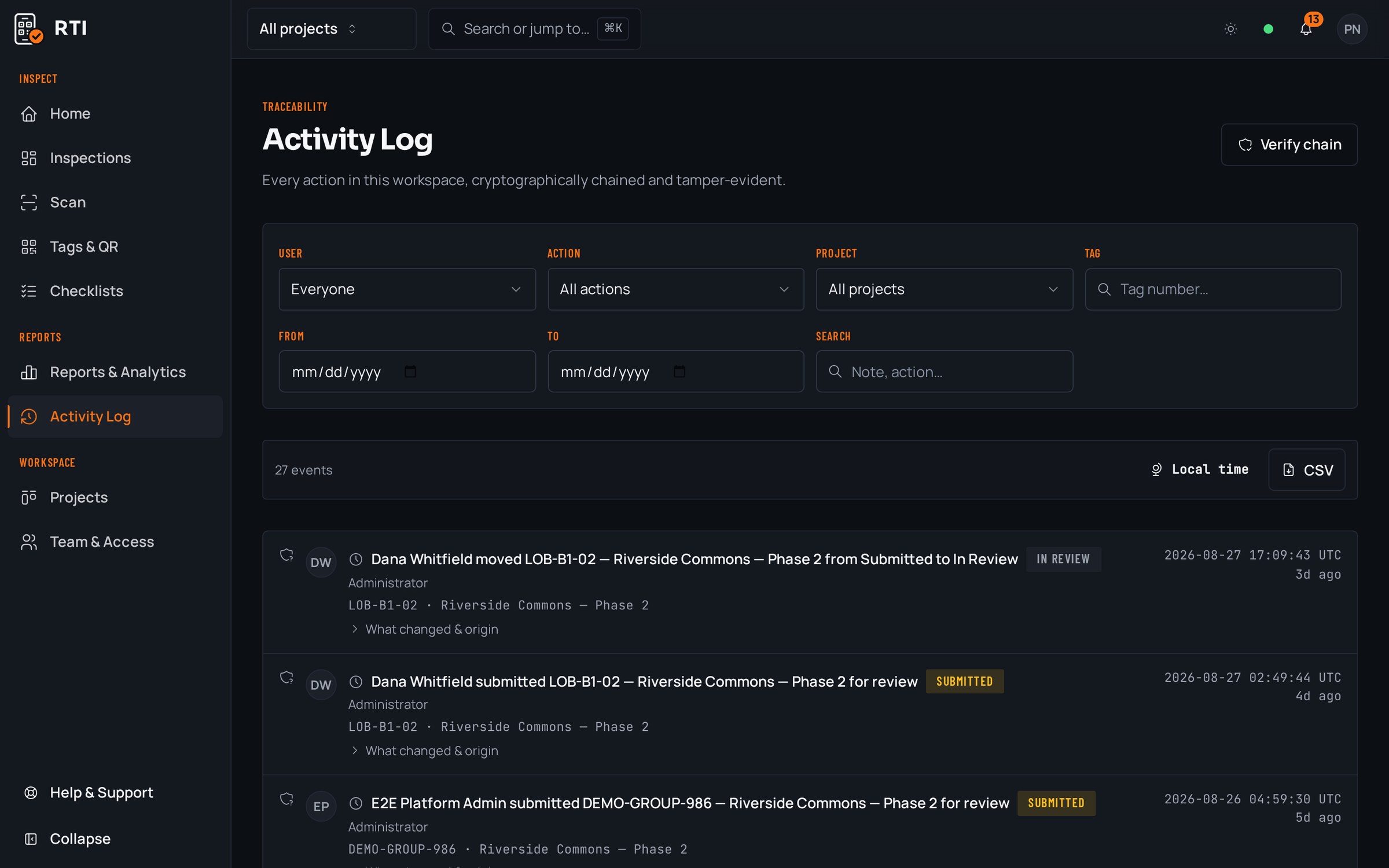
Every entry is hashed over the previous one with SHA-256, so the pour and coating records are dated and provably unaltered, and they stay yours to export after the job closes.
Questions parking structures ask
- Post-tensioned pours have to be right before the concrete goes in. How does RTI catch that?
- The pre-pour submission is photo-gated. It cannot close until the tendon profile, chair heights, anchors and embeds are photographed against the deck's tag. The record that the tendons were where they belonged exists before the pour, when it is the only time it can be verified.
- Traffic coating and joints are the parts that fail early. Can the walk hold them to a standard?
- Yes. Traffic-bearing coating and each expansion joint carry checklist items with required photos of the prepared substrate, the coating and the joint seal, so the durability work is evidenced on the deck instead of assumed once cars are parking on it.
- Durability claims come up years later. Is there a record that holds up?
- Every action writes to a tamper-evident activity log that hashes each entry over the previous one with SHA-256. Years on, when a deck-repair dispute starts, the pour and coating records are dated and provably unaltered, and you keep them whether or not you still subscribe.
Put it on a real job.
Tag one area, run one walk, and see the record it leaves behind. Start free. 30 days, no card required.