Senior living
Resident comfort and life safety, held to the same proof.
A senior-living building is part apartment, part care facility. Nurse-call rough-ins, rated corridors and ADA bathrooms all have to be right, and all have to be provable. RTI gives every one of them the same checklist and the same photo requirement, unit after unit.
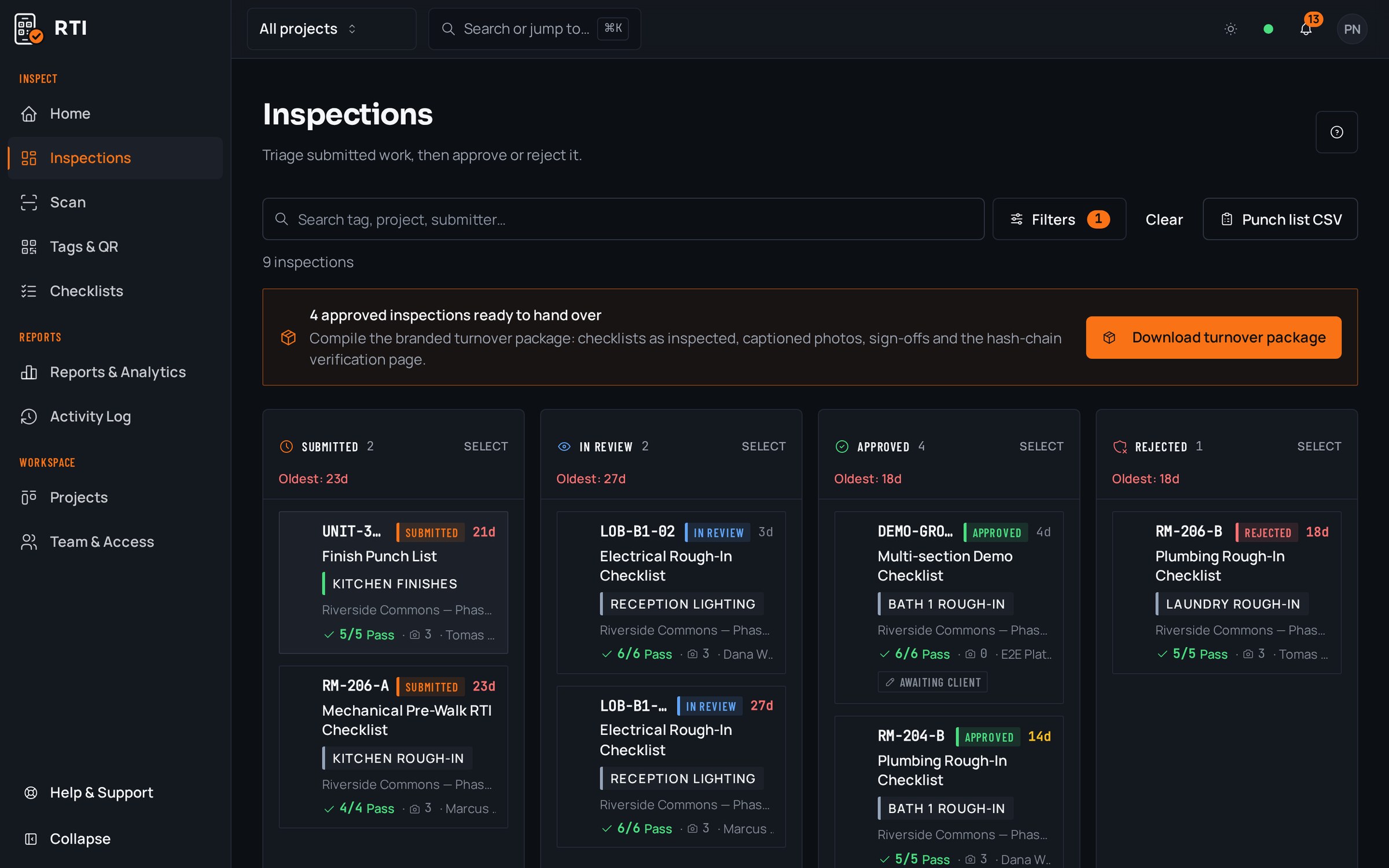

A real inspection point
What this looks like on your job
One tag, one checklist, and the photos that have to come with it.
Tag
Room 214, Nurse-Call Rough-In
SL-R214-NC
- Sticker location
- Inside resident room, at corridor door
- Bound checklist
- Nurse-call & low-voltage rough-in
- Pull-cord device boxes set at bed and bathroom2 photos required
- Corridor dome light box mounted and wired1 photo required
- Blocking installed for bathroom grab bars2 photos required
- ADA maneuvering clearance held at bathroom door1 photo required
Checklists for your work
Start from a checklist that already knows the walk
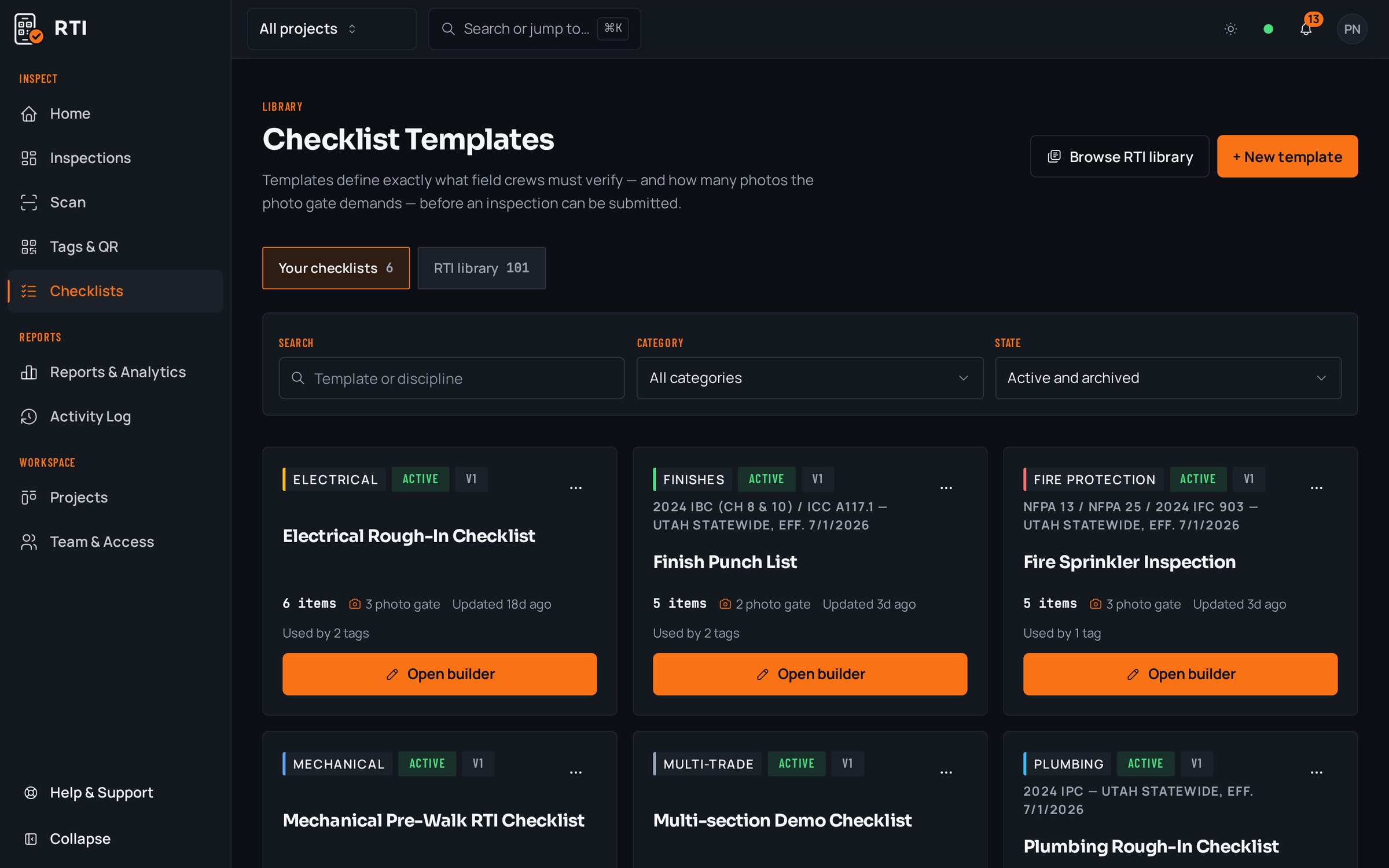
Real guides from the RTI library. Sections in build order, what to look for on each item, and the photos that prove it. Free to read, one click to run on a tag.
- Electrical rough-inElectrical rough-in inspection checklistBoxes, conductors, grounding and protection before close-in.13 items21 photos
- Fire Protection FinalFire Protection final inspection checklistHeads, escutcheons, spare stock and system interface verified before the AHJ final and turnover6 items9 photos
- Final inspectionFinal inspection checklist for constructionThe handover walk: systems, life safety, finishes and documentation.15 items25 photos
What gets in the way, and what RTI does about it
Today
Every resident room has a nurse-call rough-in, and the only assurance they were all done the same way is the low-voltage foreman's word.
With RTI
One checklist bound to every room tag means each scan opens the identical list with the identical photo requirement, so room 214 and room 340 carry the same proof.
Today
The life-safety inspection arrives and someone is digging for photos of firestop and rated assemblies that closed up weeks ago.
With RTI
Each rated assembly is tagged, and its submission cannot close until the firestop and rating photos are attached, so the evidence is on the record before the wall is covered.
Today
When a resident-safety question surfaces later, nobody can say who verified the grab-bar blocking or the ADA clearance, or when.
With RTI
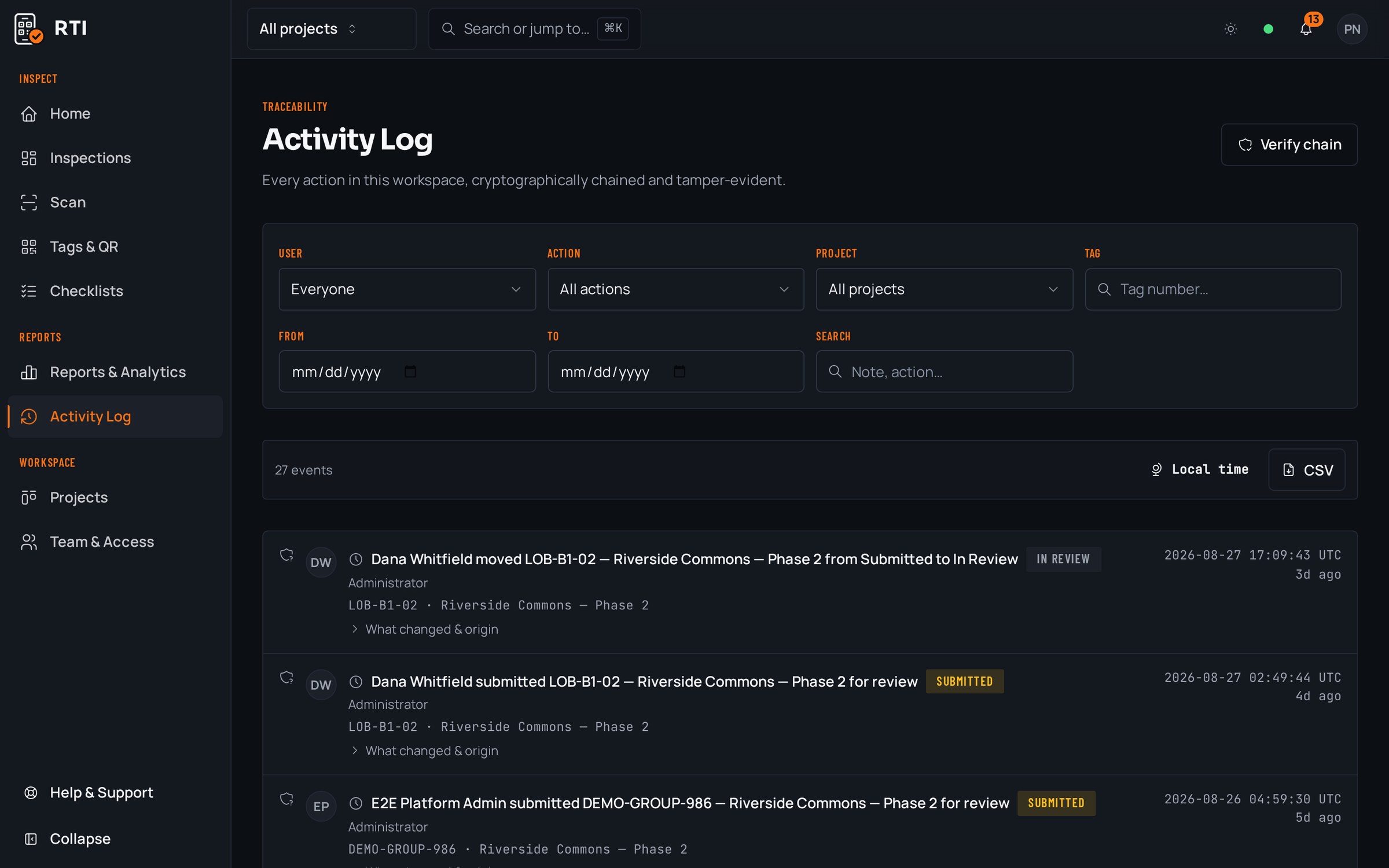
Every action writes to an activity log that hashes each entry over the last with SHA-256. Alter one record and every hash after it breaks, so the sign-off is dated and cannot be quietly rewritten.
Questions senior living ask
- We have low-voltage systems in every resident room. How does RTI keep those straight?
- You build the nurse-call and low-voltage rough-in checklist once and bind it to every room tag. Each scan opens the identical list, so the pull-cord at the bed, the dome light in the corridor and the device boxes get documented the same way in room 214 as in room 340.
- Life-safety assemblies get inspected hard. Can RTI hold that standard across the floor?
- Yes. Rated corridor walls, smoke-compartment barriers and door assemblies each carry a tag and a checklist with a photo requirement, so a submission cannot close until the firestop and rating evidence is attached. The proof for the AHJ is captured at the wall, not gathered afterward.
- Resident bathrooms have real accessibility requirements. Can the walk capture those?
- It can. The unit checklist includes the ADA clearances, grab-bar blocking and roll-in shower items with their required photos, so the accessibility work is evidenced room by room instead of assumed because the fixtures went in.
Put it on a real job.
Tag one area, run one walk, and see the record it leaves behind. Start free. 30 days, no card required.